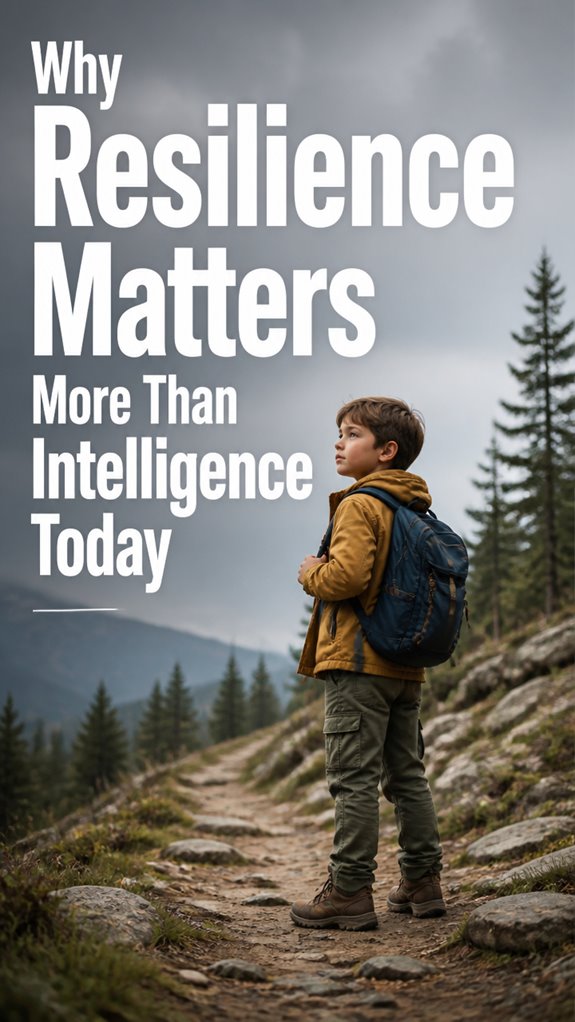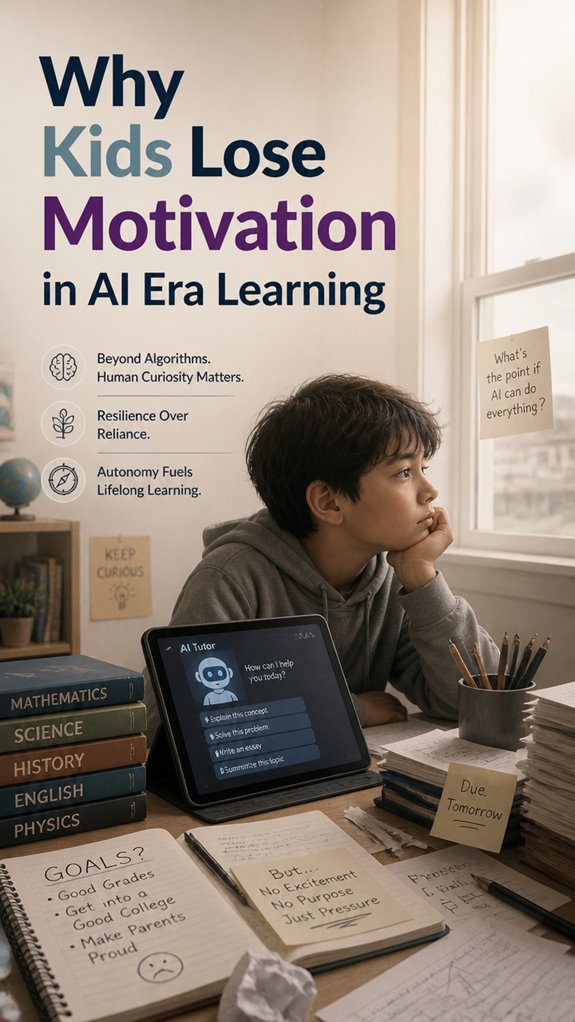
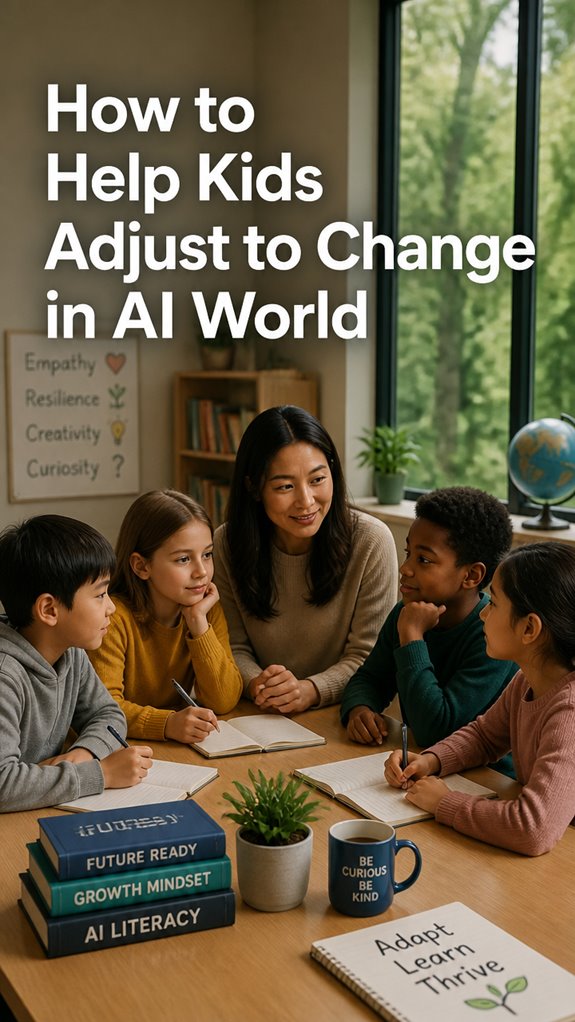
How do you equip your child to thrive when AI reshapes everything around them? By building resilience, curiosity, and critical thinking skills that make change feel like an adventure rather than a threat.
Real Stories Shape Real Skills
My daughter came home panicked about AI replacing her future career. Instead of dismissing her worry, we built something together. We started experimenting with AI tools, breaking them apart, questioning their limits. She discovered they weren’t magic—they were tools needing human judgment. That’s when Adaptive Atlas clicked into focus for us. We created it because families needed a genuine roadmap, not corporate cheerleading about the future.
When Fear Becomes Fuel
Last Tuesday, she asked me to help her use an AI writing tool for her essay. Instead of doing it for her, we explored what it got wrong. She caught logical gaps I missed. In that moment, she shifted from anxiety to authorship. She owned her learning.
Quick Takeaways
- Foster a safe, supportive environment that encourages curiosity and experimentation without fear of failure.
- Teach children to develop adaptive mindsets, viewing change and AI automation as opportunities for growth.
- Build resilience and emotional intelligence through conversations, reflection, and modeling empathetic listening.
- Equip kids with critical thinking and algorithmic skills to navigate and leverage AI tools confidently.
- Design routines and supports that help children become independent, flexible learners capable of thriving amid constant change.
How to Foster Kids’ Curiosity and Love of Learning
Fostering curiosity and a love of learning starts with creating an environment where children feel safe to explore and ask questions. When kids see curiosity as a natural part of life, they develop intrinsic motivation to discover and understand.
This approach encourages creative exploration, which is essential for thriving in a world of constant change. Instead of guiding them to memorize facts, focus on nurturing their ability to think independently and pursue what excites them.
Children will naturally seek out new ideas when they feel supported and allowed to experiment. Keep in mind, the goal isn’t perfection, but fostering a growth mindset that regards challenges as opportunities.
Over time, this helps them build long-term confidence and adaptability, shaping a future where curiosity fuels their ability to navigate uncertainty.
Practical Ways to Teach Resilience and a Growth Mindset
Building resilience and a growth mindset in children may seem challenging amid constant change, but by focusing on specific, practical approaches, you can create a steady foundation.
Emphasize emotional resilience by helping kids see setbacks as opportunities to learn, not failures. Encourage learning autonomy by giving them responsibilities that develop independence and problem-solving skills. Avoid framing challenges as threats; instead, view them as natural parts of growth.
Reframing fears about a changing world into actionable steps helps them feel more in control. Teaching children to verify information sources equips them with critical thinking tools they’ll need to navigate an increasingly complex world. Acknowledge that adapting takes time, but consistent, supportive routines strengthen their capacity to handle uncertainty.
These approaches foster a mindset that views change as an opportunity for ongoing development, ensuring they’re prepared for the future’s unpredictability with confidence and resilience.
Building Critical Thinking and AI Skills for the Future
As the world evolves rapidly, children need more than just facts—they must develop the ability to think critically and work effectively with AI tools. This skill set, rooted in algorithmic thinking and cognitive flexibility, prepares them to navigate constant change. Instead of fearing tech shifts, focus on helping your child see patterns, question assumptions, and adapt strategies—core elements of system-level thinking.
Developing algorithmic thinking enables kids to break down problems into manageable steps, while cognitive flexibility allows them to shift viewpoints when needed. These skills build resilience, foster independence, and lay the groundwork for future learning.
Strategies to Develop Empathy and Social Skills in Children

While many parents worry that developing social skills and empathy might take a backseat in a technology-driven world, these qualities are more essential than ever for a child’s future success. Cultivating emotional intelligence helps children understand themselves and others, fostering stronger relationships. Open communication between parents and children creates the foundation for children to feel safe expressing their emotions and perspectives. Cultural awareness broadens their outlook, making them adaptable and open-minded. To support this, you can:
- Encourage conversations about feelings and viewpoints
- Model empathetic listening during daily interactions
- Create diverse social experiences to build cultural awareness
- Promote reflection on experiences to deepen emotional understanding
Adjustment Skills Toolkit for Kids
In a world of rapid change, children need more than just adaptability—they need specific tools to help manage uncertainty, frustration, and setbacks. Building emotional intelligence helps them recognize and regulate feelings, while cultural awareness fosters flexibility across diverse situations. Understanding AI-driven uncertainty can help parents model how to navigate complex technological changes alongside their children. Here’s an Adjustment Skills Toolkit:
| Skill | Why it matters | How to develop it |
|---|---|---|
| Resilience | Helps bounce back from setbacks | Encourage reflection, celebrate effort |
| Self-awareness | Clarifies feelings and reactions | Practice mindful journaling |
| Empathy | Builds social harmony | Use stories and role-playing |
| Openness | Embraces change and new viewpoints | Exposure to different cultures and ideas |
| Self-regulation | Controls impulses and frustrations | Teach deep breathing and pause techniques |
Focus on systems, not quick fixes. These tools empower your child’s long-term future in an ever-evolving world.
Neuroscience Insights on Adaptability
Consider that:
- Neurogenesis allows the brain to generate new neurons, boosting flexibility.
- Age-related decline in neurogenesis can slow cognitive adaptability, but training helps bridge this gap.
- Synaptic stability keeps essential skills steady even as the brain explores new ways to think.
- Environmental influences and experience shape how well children learn to recalibrate their thinking.
- Building personal branding skills early helps children develop a resilient identity that adapts alongside their evolving cognitive abilities in an AI-driven world.
Overcoming Fear of Change

Fear of change can feel overwhelming, especially when you worry about the uncertain futures your child might face. Technological anxiety and future uncertainty are natural reactions in this fast-evolving world.
But rather than focus on what’s lost, shift your *viewpoint* toward what can be gained through resilience and adaptable skills. Remind yourself that change isn’t solely disruptive—it’s an opportunity for growth.
You can help your child build confidence by fostering a mindset that views change as a pattern to understand, not an obstacle to fear. Focus on developing systems that prioritize long-term capability, like adaptability and continuous learning. By intentionally choosing future-ready skills, you equip your child with the tools needed to thrive regardless of how technology evolves.
These skills turn uncertainty into a manageable, even empowering, force. Stability comes not from resisting change but from learning how to navigate it confidently.
The Adaptive Atlas Anti-Fragile Child System
Children who are resilient in the face of uncertainty develop what’s called an anti-fragile mindset. This mindset enables them to handle change, setbacks, and ambiguity with emotional regulation and steady risk assessment.
Instead of avoiding difficulty, they learn to grow through it. To foster this, focus on habits like:
- Teaching children to recognize and accept their feelings without overreacting
- Encouraging proactive problem-solving and reflection
- Building routines that promote stability during chaos
- Helping them understand that setbacks are part of growth
This approach reduces fear by giving your child tools to stay grounded and adaptable. The anti-fragile child system provides a comprehensive framework for developing these capacities through intentional practice and environmental design.
Keep in mind, creating this resilience is about consistent, intentional patterns that prepare your kid to navigate an ever-changing future confidently and autonomously.
The Full Adaptive Atlas Framework
Adaptive Atlas weaves five interconnected systems into one complete framework that equips your child for a future of constant evolution. You break free from predictive planning that locks kids into outdated paths. Instead, you build their power to thrive amid change.
Ditch the fixed mindset—it’s the trap that fears AI disruption. You’ve worried jobs vanish; reframe it: roles evolve, but adaptable kids create value anywhere. The Anti-Fragile Child System builds resilience.
The Learning Stack fuels self-directed growth. Future Skill Stack hones irreplaceable thinking, like Elon Musk’s problem-framing edge. AI Learning System turns tools into amplifiers.
Child Type Navigator tailors it all to your child’s unique wiring.
This flow compounds capability over time. You gain control, raising a liberated creator who shapes tomorrow, not chases it.
The Adaptive Atlas Framework
Five connected systems designed to help parents raise adaptable, future-ready children in a world shaped by AI, automation, and constant change.
| 🛡️ |
Anti-Fragile Child SystemBuilds resilience, adaptability, and the ability to handle uncertainty without shutting down. |
| 📚 |
Learning Stack ModelDevelops self-directed learning habits and continuous skill acquisition beyond school systems. |
| 🚀 |
Future Skill Stack SystemFocuses on high-value human skills that remain relevant in an AI-driven economy. |
| 🤖 |
AI Learning SystemTeaches children how to use AI as a thinking partner instead of becoming dependent on it. |
| 🧭 |
Child Type Navigator SystemPersonalizes learning and development based on each child’s strengths and personality. |
FAQ
How Can Parents Balance AI Learning With Traditional Social Activities?
You can balance AI learning with social activities by encouraging digital empathy and teaching AI ethics, fostering meaningful in-person connections that develop social skills. This approach liberates children, helping them navigate technology and human relationships confidently and ethically.
What Are Effective Ways to Address Ai-Related Behavioral Changes in Kids?
You can foster emotional resilience by encouraging open dialogue about AI changes and peer support networks, helping kids express feelings freely, build confidence, and develop adaptable social skills—liberating them from fear and fostering growth amid change.
How Does Cultural Background Influence Children’s Adaptation to Ai-Driven Environments?
You navigate a river of cultural norms, where language barriers are rocks shaping currents. Embrace diverse viewpoints, breaking free from stereotypes, so your child can soar, unanchored by boundaries—creating a world where adaptation and liberation flow as one.
What Role Do Teachers Play in Supporting Children’s Ongoing AI Literacy Development?
You empower children’s ongoing AI literacy development by designing an engaging AI curriculum that fosters critical digital literacy, encouraging exploration, questioning, and collaboration. You liberate them from passive learning, inspiring active mastery and confident navigation of the changing AI terrain.
How Can We Ensure Equitable Access to AI Education for All Children?
You can address equity challenges by advocating for policies that guarantee access disparities are eliminated, providing resources to underserved communities, and promoting inclusive AI literacy programs, empowering all children to thrive in the AI-driven future, regardless of background.
References
- https://www.brookings.edu/articles/tips-for-parents-raising-resilient-learners-in-an-ai-world/
- https://mountainlaurel.org/future-proofing-your-child-for-an-ai-world/
- https://technicallyoptimistic.substack.com/p/5-skills-kids-and-adults-need-in
- https://oxfordlearning.com/9-ways-to-help-kids-navigate-the-world-of-ai/
- https://www.gse.harvard.edu/ideas/edcast/24/10/impact-ai-childrens-development
- https://mustangmessenger.net/8462/entertainment/watching-childhood-meet-ai-observations-on-how-this-ai-world-is-shaping-kids-today/
- https://news.stonybrookmedicine.edu/news/researchers-have-a-new-understanding-of-cognitive-adaptability/
- https://pubmed.ncbi.nlm.nih.gov/41469445/
- https://www.annualreviews.org/content/journals/10.1146/annurev-devpsych-120621-042108?crawler=true
- https://bcs.mit.edu/news/finding-some-stability-adaptable-brains