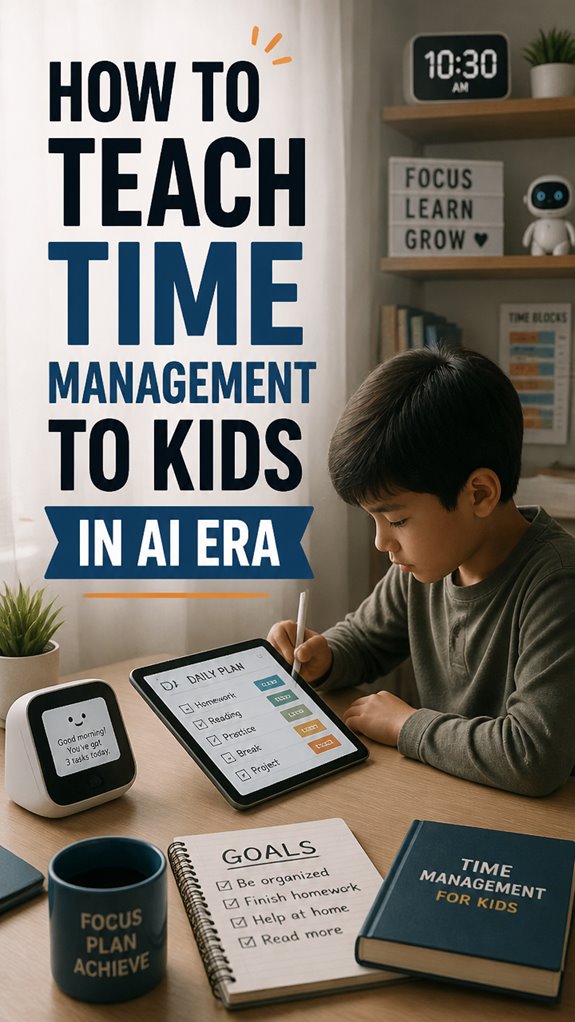
How do you help your child manage time when technology keeps evolving faster than your parenting playbook? Build adaptable skills through visual tools, movement, and tech-integrated routines that foster responsibility and independence.
Teaching Time Management Through Real Experience
My daughter once spent three hours “organizing” her digital files, convinced it mattered. That’s when I realized time management isn’t about rigid schedules. It’s about understanding why we do things. At Adaptive Atlas, we write resources because kids need frameworks that work with AI, not against it. We help parents decode systems behind daily actions, turning confusion into confidence.
A Moment That Changed Everything
Last Tuesday, my son asked why his timer kept buzzing. We sat together, mapping his actual tasks versus clock time. Suddenly, he grasped the connection between planning and breathing room. That single conversation shifted how he approaches his week now. Patience and incremental steps create lasting change.
Quick Takeaways
- Use engaging, visual methods like animations and storytelling to make time concepts tangible and relatable for children.
- Incorporate movement, sensory activities, and mindfulness practices to develop attention, self-regulation, and neural resilience.
- Leverage AI and digital tools to set routines, manage tasks, and reinforce prioritization through alerts and goal tracking.
- Foster independence and ownership by breaking tasks into manageable steps, rewarding effort, and promoting responsibility.
- Develop an adaptable mindset by teaching resilience, flexibility, and patience through small incremental planning and growth-oriented feedback.
Why Teaching Kids Time Management Matters in the AI Age
Have you ever thought about how quickly the world around us is changing? In this fast-moving environment, teaching kids time management isn’t just about scheduling their day. It’s about building skill resilience—helping them adapt when unpredictability becomes the norm.
They need to learn how to stay focused and manage their time in a way that keeps them flexible, curious, and prepared for constant change. The future isn’t about predicting what’s next but about developing the ability to navigate uncertainty confidently.
When children grasp the value of time—knowing how to prioritize and reflect—they gain control over their growth. Building sustainable habits early helps them maintain energy and wellness while managing their responsibilities effectively. This skill isn’t just helpful now; it’s a foundational tool for future success in a world shaped by AI and progressively changing systems.
Fun and Visual Ways to Help Kids Learn About Time
Helping kids understand time doesn’t have to be complicated or dull. Using colorful animations makes abstract concepts like hours and minutes feel more tangible. Visual tools turn learning into an engaging experience, not just a lecture.
Colorful animations and visual tools make learning about hours and minutes engaging and easier for kids to grasp.
Pair these with storytelling techniques—like creating stories around daily routines—to help kids see how time shapes their days. These methods keep learning fun and foster a sense of mastery, which reduces fears about complexity.
Keep in mind, today’s goal isn’t perfection but building foundational understanding that grows with them. By making time relatable and visual, you empower your child to develop long-term skills in managing their day—skills crucial in an uncertain, fast-changing world. Time management is one of the future-ready skills that will help children adapt and thrive as technology and work environments continue to evolve.
Clear, simple, and consistent approaches are your best allies.
How AI and Technology Support Kids’ Time Skills
As parents, you might worry that technology could distract your child from developing essential time skills, but in reality, AI collaboration and digital tools are powerful allies when used thoughtfully. They can help children learn to manage their time better by fostering technology literacy and guiding them to balance screen use with real-world activities.
For example, learning to set alerts or using apps that encourage tracking tasks can build awareness of time. Instead of fearing AI replacing human judgment, see it as a partner that amplifies decision-making. Strong relationships and connections with family members create the foundation for children to develop healthy habits around technology use and time management.
Building Schedules and Responsibility Through Task Breakdown

Building routines around task breakdown helps children see how their actions lead to bigger goals, giving them a clear sense of progress and control.
Creating routines that break tasks into steps helps children understand progress and feel more in control.
When you focus on task prioritization, you help your child develop time awareness, understanding how to allocate effort effectively.
Break tasks into manageable steps, so they feel less overwhelming and more achievable. This process teaches children to recognize what’s urgent versus important, empowering them to make smarter choices about how they use their time.
It shifts the focus from just completing tasks to understanding the system behind their actions.
Over time, this builds their confidence in managing responsibilities, preparing them to adapt skillfully in an environment of continuous change.
It’s a practical way to foster independence and resilience long-term.
Promoting Ownership and Patience With Incremental Planning
When you encourage your child to plan in small, manageable steps, you help them develop patience and ownership of their goals. Using reward systems reinforces their effort and builds confidence. Routine consistency is essential; it creates a predictable pattern that fosters discipline and resilience.
Avoid rushing or demanding instant results—these create stress and undermine long-term growth. Instead, focus on guiding your child to see progress over time. Celebrate small wins, so they feel connected to their achievements.
This approach helps children understand that success comes from steady, incremental actions, not overnight perfection. In the dynamic world of AI, teaching patience and ownership today prepares them to adapt and thrive—building a mindset that values systems, persistence, and long-term capability. Research shows that healthy AI usage limits during critical developmental years support better focus and goal-setting outcomes for children.
Creating a Family Time System That Comes Together
Have you ever felt that your family’s schedule is chaotic or disconnected? Creating a family time system helps restore balance and purpose. Start by establishing family rituals—like shared meals or weekend walks—that anchor your days.
Set clear digital boundaries, such as device-free zones or designated tech-free times, so everyone connects without distraction. Consistency builds trust and creates routines your kids can rely on, fostering stability in a fast-changing world.
Keep in mind, it’s not about controlling every second but designing patterns that promote presence and shared understanding. These systems teach children that structure supports freedom—allowing them to adapt confidently to continuous change. While intelligence helps kids solve problems, resilience outweighs intelligence when facing the uncertainties and setbacks that arise in their daily lives.
When your family comes together around reliable rhythms, you’re equipping your child with skills to navigate ambiguity and build resilience for the future.
Time Management Starter Kit for Kids
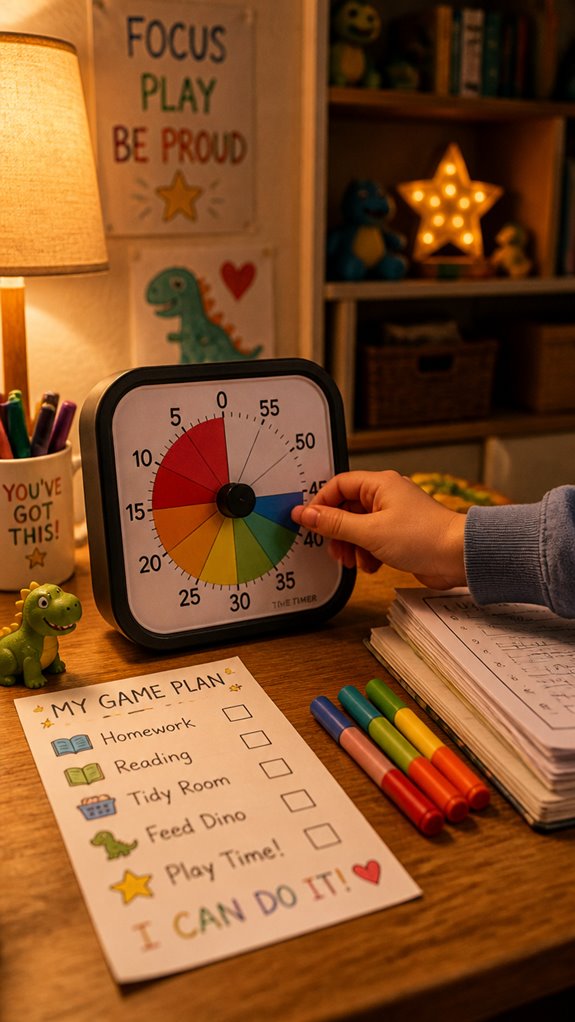
Many parents worry about helping kids manage their time wisely in a world where distractions are everywhere.
Parents often seek ways to help kids stay focused amid constant distractions.
The good news is, you can create a simple starter kit that builds independence from the start. Use gamified challenges to make time management engaging—turn chores or homework into fun competitions.
Visual timers help children understand how long tasks will take and stay focused without feeling overwhelmed. These tools aren’t about controlling—they’re about guiding kids to see patterns and set boundaries. Understanding causes of distraction can help you better support your child’s focus and time management efforts.
Your goal is to foster habits that prepare them for a future where adaptability matters more than rigid schedules.
Neuron Development and Focus Techniques
Building strong focus skills is essential for your child’s success in a world where constant change and new technologies are the norm. Focus training taps into neural plasticity, helping their brain adapt and strengthen attention pathways.
To support this, incorporate activities that develop neuron development through rhythm and sensory input.
- Rhythmic movement patterns like marching, skipping, and crossing midline enhance balance and focus.
- Sensory stimulation activities, such as sound exploration and sensory bins, activate multiple senses for better attention.
- Stability and proprioceptive exercises like ball work improve body awareness and self-regulation.
- Mindfulness practices, including breathing and listening games, teach sustained attention and impulse control.
These techniques create a flexible, resilient brain ready for future challenges, enabling your child to thrive amid ongoing change. Neural plasticity refers to the brain’s ability to reorganize itself by forming new neural connections throughout life, which these activities actively promote.
Overcoming Procrastination Strategies
Procrastination often feels like a stubborn barrier that slows down your child’s progress, but understanding its roots can help you develop strategies that foster long-term resilience. Procrastination triggers, like uncertainty or feeling overwhelmed, can hold kids back from taking action.
Instead of focusing on stopping procrastination altogether, think about how to remove these triggers and build motivation boosters. Celebrate small wins to reinforce their sense of capability, and break tasks into manageable steps, reducing the intimidation factor. When you link effort to reward, you create a direct connection that helps children understand how their actions lead to positive outcomes.
Emphasize patience, small progress, and adaptability, so your child doesn’t fear failure or delay indefinitely. Over time, this approach shifts their mindset from avoidance to confident action.
The Adaptive Atlas Anti-Fragile Child System
In a world of constant change, your child’s ability to stay resilient becomes more important than ever. The Adaptive Atlas Anti-Fragile Child System helps children build emotional resilience and decision-making skills, so they can thrive amid uncertainty.
They learn to stay engaged under pressure, recover from setbacks, and grow through challenges.
This approach reframes fears about the future into practical strengths, empowering kids to adapt without losing confidence. By cultivating antifragility, children don’t just bounce back from adversity—they emerge stronger and more capable than before.
- Develops emotional resilience through real-world challenges
- Enhances decision-making skills in unpredictable situations
- Fosters a growth mindset that sees failure as growth
- Encourages independence and self-trust in maneuvering change
The Full Adaptive Atlas Framework
The full Adaptive Atlas Framework offers an all-encompassing way to guide your child’s growth in an unpredictable world. It recognizes that traditional ideas of focus endurance and static timelines no longer apply.
Instead, your child needs adaptable skills to manage their time perception amid constant change. This system emphasizes cultivating focus through resilience training, helping them stay engaged even when challenges arise.
Develop adaptable skills to sharpen focus and resilience, empowering your child to thrive amidst constant change and challenges.
It also encourages flexible early effort, knowing that focus can develop over time with practice. By shifting from fixed expectations to a long-term view of capability-building, you empower your child to navigate uncertainty confidently.
This framework helps you see beyond fear, giving practical steps to foster an adaptable mind-set, ensuring your child remains relevant, capable, and resilient in an ever-evolving world.
The Adaptive Atlas Framework
Five connected systems designed to help parents raise adaptable, future-ready children in a world shaped by AI, automation, and constant change.
| 🛡️ |
Anti-Fragile Child SystemBuilds resilience, adaptability, and the ability to handle uncertainty without shutting down. |
| 📚 |
Learning Stack ModelDevelops self-directed learning habits and continuous skill acquisition beyond school systems. |
| 🚀 |
Future Skill Stack SystemFocuses on high-value human skills that remain relevant in an AI-driven economy. |
| 🤖 |
AI Learning SystemTeaches children how to use AI as a thinking partner instead of becoming dependent on it. |
| 🧭 |
Child Type Navigator SystemPersonalizes learning and development based on each child’s strengths and personality. |
FAQ
How Can Parents Tailor Time Management Teaching for Different Children’s Learning Styles?
Keep in mind, “one size fits none.” You can tailor teaching time management by understanding each child’s individual learning styles, then customizing approaches to empower their independence, making time skills a tool, not a rule, for their unique growth.
What Are Effective Ways to Incorporate AI Tools Into Daily Time Routines?
You can incorporate AI scheduling and digital reminders into daily routines, empowering your child to self-manage, stay focused, and build independence. Use these tools to liberate them from chaos and foster autonomous, adaptable time habits.
How Do Cultural Differences Influence Children’s Understanding of Time Management?
Cultural outlooks shape children’s understanding of time perception, influencing their sense of urgency and planning. Embrace these differences, encourage adaptable routines, and foster open discussions to liberate children from rigid time frameworks, empowering their unique growth.
How Early Should Kids Start Practicing Basic Time Management Skills?
You should start cultivating early habits around age milestones, encouraging your child to manage small tasks independently. This empowers them to develop confidence, adaptability, and a sense of control—crucial skills for thriving in an ever-evolving AI-driven world.
What Signs Indicate a Child Is Struggling With Time Management Skills?
If you notice your child’s attention drifting frequently or difficulty maintaining routine flexibility, they may struggle with time management, indicating they need support in developing skills that balance discipline and adaptability for long-term growth.
References
- https://kubrio.com/skills/time-management
- https://pengi.ai/blog/time-management-tips-kids-age-age-guide
- https://www.youtube.com/watch?v=0mIkbDKnsDY
- https://www.ohai.ai/blog/time-management-tips-for-children/
- https://www.youtube.com/watch?v=pDk90s_ifCo
- https://www.continentalpress.com/blog/ai-for-teachers/
- https://learning.northeastern.edu/ai-student-guides-using-ai-for-time-management/
- https://smartclassroommanagement.com/2025/05/15/how-to-teach-ai-era/
- https://communityconnectmedia.com/teaching-time-management-skills-ai-cant-do-that/
- https://neurofitconnections.com/2023/11/06/6-neurodevelopmental-exercises-for-enhanced-focus/