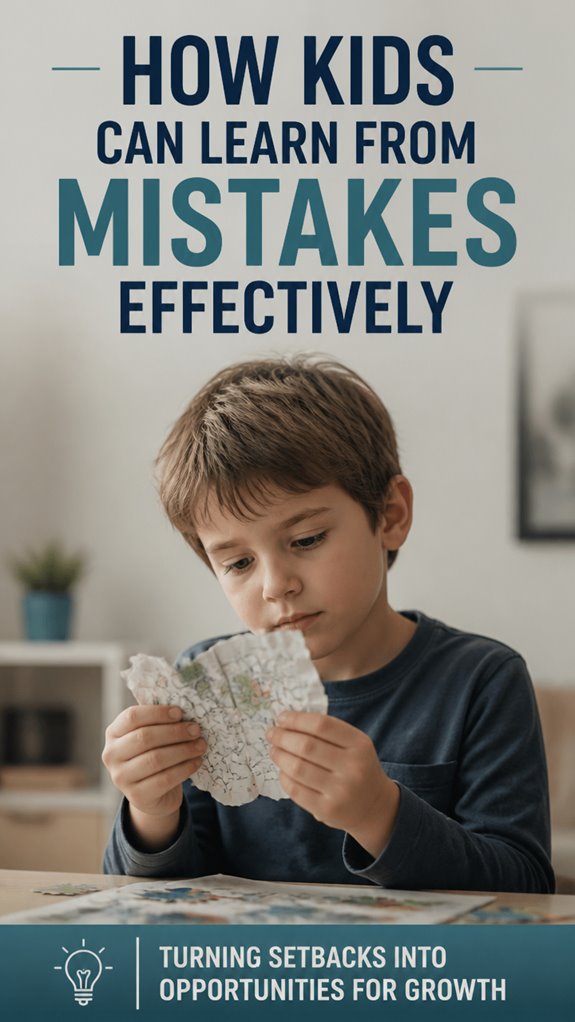
How Can Kids Turn Mistakes Into Superpowers?
Mistakes aren’t failures. They’re actually brain-strengthening events. When children embrace errors as growth opportunities rather than shameful moments, they build resilience and confidence that carries them through life’s inevitable challenges.
A Lesson From My Kitchen Disaster
My daughter baked cookies last spring. They turned into charcoal briquettes. Instead of crying, she asked why they burned. We examined temperature, timing, ingredients. She baked again. Perfect. That conversation taught her more than any lecture about effort and brain plasticity combined. That’s exactly why we created Adaptive Atlas. We wanted tools that help parents guide kids through these pivotal learning moments without the guilt or frustration.
When Failure Became My Teacher
Last month, I watched my son struggle with his math test. Rather than focusing on the grade, we dissected each wrong answer together. His brain lit up during our conversation. Suddenly, mistakes felt like secret clues instead of evidence of inadequacy. He’s now asking for harder problems. Growth mindset isn’t theoretical. It’s revolutionary.
Quick Takeaways
- Normalize mistakes as part of the learning process to reduce fear and encourage resilience.
- Encourage reflection on errors to identify lessons and promote understanding.
- Celebrate effort and persistence rather than just outcomes to foster a growth mindset.
- Provide a calm, supportive environment that treats mistakes as opportunities for growth.
- Use activities like role-playing and problem-solving to help children practice learning from setbacks.
Why Mistakes Are the Key to Your Child’s Growth
Mistakes often feel like setbacks, but in reality, they’re some of the most valuable moments for your child’s growth. They’re opportunities to develop resilience, which helps children stay engaged and adaptable in a world of constant change.
Mistakes are vital growth moments that build resilience and adaptability in children.
When you encourage error analysis, you guide your child to see mistakes not as failures, but as perspectives for improvement. This shifts the focus from fear of failure to understanding and learning. Research shows that neuroplasticity in children enables their brains to strengthen neural pathways through repeated practice and learning from errors.
Cultivating resilience isn’t about avoiding mistakes—it’s about building capacity to recover and grow stronger through them. The goal is to help your child view challenges as part of learning, setting the foundation for long-term capability.
With a clear system, you can support a mindset that nurtures flexibility, independence, and lifelong learning.
How to Help Your Child Develop a Growth Mindset at Home
Encouraging your child to develop a growth mindset begins with how you respond to their efforts and challenges. When you acknowledge their persistence and focus on progress, you foster emotional resilience, helping them bounce back from setbacks.
Emphasize the importance of learning from mistakes, rather than fearing failure. This nurtures intrinsic motivation—making them enthusiastic to explore and improve simply because they value growth.
Instead of fixing their shortcomings, celebrate their effort and curiosity. Remember, children need consistent, calm guidance to see setbacks as opportunities. Research shows that building resilience through repeated exposure to manageable challenges strengthens their ability to overcome future obstacles.
By creating an environment that normalizes mistakes and highlights growth, you help build long-term confidence.
This approach guarantees they develop the mindset necessary to adapt, innovate, and thrive in a future shaped by continuous change.
Practical Strategies for Parents to Support Kids in Embracing Failures
Supporting your child in embracing failure starts with shifting your outlook on setbacks. Instead of avoiding risk-taking out of fear, see failures as essential steps to develop emotional resilience.
When your child faces challenges, stay calm and remind them that setbacks are natural and growth-promoting. Encourage them to analyze what went wrong without judgment, fostering a mindset of learning.
This approach builds their confidence to take risks needed for future success. Recognize that failure isn’t a sign of inadequacy but a chance to build adaptability. Research shows that conquering fear of failure directly correlates with improved academic performance and willingness to tackle challenging tasks.
Reinforce that setbacks don’t define them, but how they respond does. Over time, this helps your child develop the skills to navigate uncertainty and thrive in an unpredictable world, ultimately shaping a resilient, future-ready mindset.
Fun Activities That Teach Kids Why Mistakes Matter

Many children learn best through hands-on, engaging experiences that show them why mistakes are valuable. Creative games and role play exercises turn learning into a playful exploration of failure and growth. For example, you can create storytelling scenarios where children act out mistakes and solutions, helping them see mistakes as a natural part of learning. Research shows that growth mindset development significantly enhances children’s ability to view setbacks as opportunities rather than failures. Here’s a simple way to visualize this:
| Activity | Lesson |
|---|---|
| Role play games | Emphasize that errors help improve skills |
| Creative storytelling | Show how mistakes lead to new ideas |
| Puzzle challenges | Encourage persistence despite setbacks |
| Building projects | Celebrate trial and error phases |
| Reflection conversations | Normalize mistakes as growth moments |
Common Pitfalls to Watch Out for When Supporting Your Child’s Learning
While it’s natural to want to protect your child from every mistake, trying to eliminate failure altogether can hinder their long-term growth. Instead, focus on fostering emotional resilience and error acceptance.
Trying to eliminate failure can hinder growth; instead, nurture resilience and view mistakes as vital learning opportunities.
Avoid overcorrecting or rushing to fix problems—it teaches children to see mistakes as threats rather than opportunities to learn. This can create fear and reduce their confidence over time.
Keep in mind, setbacks are part of growth, and maintaining a calm, supportive attitude helps children develop the strength to handle challenges. Be mindful of giving your child space to experience failure without judgment.
Frame errors as chances to learn, not flaws. This approach builds their capacity to adapt and thrive in a world full of change, setting them up for future success. As AI transforms how people work, developing this growth mindset early equips children with the resilience they’ll need to navigate evolving career landscapes.
Mistake Learning Toolkit for Kids
When your child makes a mistake, it’s easy to feel worried or want to fix it quickly. But this moment is an opportunity to develop error resilience—a core learning strategy.
A mistake isn’t a sign of failure; it’s a chance to understand, adapt, and grow. The goal is to create a mistake learning toolkit that helps your child build confidence in managing setbacks. Focus on encouraging reflection, asking what can be learned, and exploring new approaches.
This approach shifts the focus from perfection to progress, reinforcing that mistakes are part of long-term capability building. By framing errors as natural and useful, you help your child develop the resilience needed for future challenges. Research shows that growth from errors significantly enhances a child’s ability to persist through difficult tasks and setbacks.
This mindset supports a flexible, adaptable mindset, essential for thriving in a world of constant change.
Brain Plasticity Research Findings
Understanding how a child’s brain adapts through plasticity can help you see the importance of learning from mistakes. Neural adaptation involves changes in the brain’s structure as it responds to experiences, especially during growth. Error-monitoring and brain activity studies highlight how engaging with mistakes prompts strategic brain engagement, which promotes effective learning. Brain development isn’t about fixed abilities, but about flexibility—overproduction and pruning of connections shape skills quickly. Research shows that when children engage with mistakes, their brains actively reorganize, encouraging long-term growth. For example, error-related activity, like the ERN, alerts the brain to improve future responses, while growth mindset children tend to channel mistakes into motivation. This natural malleability means that every error is an opportunity for development, not failure. Moving beyond passive learning allows students to actively process their mistakes rather than simply receiving information.
Identifying and Fixing Misconceptions
Kids often develop misconceptions without even realizing it, and these misunderstandings can hold them back in learning and problem-solving.
To help them, you can focus on error analysis—reviewing their mistakes calmly to identify where their thinking went off track.
Misconception correction becomes a powerful tool when you gently guide them to see the gap in their understanding. Instead of criticizing, create space for reflection, encouraging questions that lead to real insight.
This approach builds a mindset of continuous improvement, essential for steering a world full of change. Developing future-ready skills like critical thinking and adaptability through mistake analysis prepares children to navigate complex challenges ahead.
Remember, misconceptions are part of learning, not failures.
Helping children spot and fix these errors turns confusion into clarity, strengthening their ability to adapt and succeed over the long term.
The Adaptive Atlas Anti-Fragile Child System
| Resilience in Change | Emotional Strength | Error Reflection |
|---|---|---|
| In a world filled with unpredictable change, helping children build resilience is more important than ever. The Anti-Fragile Child System supports this, turning setbacks into growth. When children face challenges, they learn emotional resilience—staying calm, adapting, and staying engaged. Error reflection is key, encouraging kids to see mistakes as opportunities, not threats. You can guide this process by helping them understand their feelings and learn from experiences. This builds confidence and flexibility for the future. Keep in mind, resilience isn’t about avoiding failure but developing a mindset where difficulty fuels their growth. Over time, children become better equipped to navigate a shifting world, gaining independence and long-term adaptability that serve them well ahead of fleeting trends. | ||
The Anti-Fragile Child System provides a structured framework for parents and educators to systematically nurture this growth mindset in children.
The Full Adaptive Atlas Framework
The full Adaptive Atlas Framework brings together different systems that support a child’s ability to adapt and thrive in a world of constant change. It’s about shifting mindsets around learning and resilience.
Instead of fearing uncertainty, you can see it as an opportunity to develop emotional resilience, helping children grow stronger through challenges.
This framework emphasizes long-term capability, not just memorized knowledge. By focusing on systems—like fostering self-directed learning, reinforcing adaptability, and personalizing growth—you give your child tools to navigate ambiguity confidently.
It’s not about controlling the future but building their ability to stay flexible, learn continuously, and leverage new skills and tools.
Ultimately, this approach empowers your child, instead of overwhelming you with fear of the unknown.
The Adaptive Atlas Framework
Five connected systems designed to help parents raise adaptable, future-ready children in a world shaped by AI, automation, and constant change.
| 🛡️ |
Anti-Fragile Child SystemBuilds resilience, adaptability, and the ability to handle uncertainty without shutting down. |
| 📚 |
Learning Stack ModelDevelops self-directed learning habits and continuous skill acquisition beyond school systems. |
| 🚀 |
Future Skill Stack SystemFocuses on high-value human skills that remain relevant in an AI-driven economy. |
| 🤖 |
AI Learning SystemTeaches children how to use AI as a thinking partner instead of becoming dependent on it. |
| 🧭 |
Child Type Navigator SystemPersonalizes learning and development based on each child’s strengths and personality. |
FAQ
How Can Parents Balance Encouragement and Independence During Mistake-Making?
You should give emotional support and constructive feedback, encouraging independence as your child faces mistakes. Focus on growth opportunities, emphasizing self-discovery and resilience, so they learn confidently without fear, fostering liberation through trusting their own problem-solving abilities.
What Are Effective Ways to Measure a Child’s Growth From Mistakes?
Like explorers mapping new worlds, you track progress through perceptive feedback methods, observing resilience and skill development, not just outcomes. Celebrate growth, embrace challenges, and use ongoing assessments to freely adapt your approach, fostering autonomous, adaptable learners.
How Do Cultural Differences Influence Kids’ Reactions to Failure?
You influence your child’s failure perception through cultural resilience; some cultures see failure as growth, empowering them to embrace mistakes confidently, while others may stigmatize it, shaping reactions. Cultivate openness for a liberated, adaptive approach.
When Should Parents Intervene Versus Allow Kids to Fix Their Own Mistakes?
Ignore the urge to intervene; let your child stumble, fostering emotional resilience and blame avoidance. Only step in when failure threatens safety or integrity—otherwise, give autonomy and watch them grow into adaptable, future-ready creators, not blame-shifting victims.
How Can Technology Support Children in Learning From Errors?
You can support kids’ learning from errors by fostering digital resilience and providing interactive feedback through technology. Encourage experimentation, celebrate growth from mistakes, and let them develop independence while using tools that reinforce adaptive, future-proof skills in a liberated learning environment.
References
- https://genmindful.com/blogs/mindful-moments/helping-children-embrace-mistakes-for-a-growth-mindset
- https://www.steampoweredfamily.com/mistakes-learning/
- https://st.network/analysis/top/no-one-is-perfect-how-to-help-children-learn-from-mistakes.html
- https://otl.ucsb.edu/tales/magic-mistakes
- https://pmc.ncbi.nlm.nih.gov/articles/PMC11802963/
- https://charactercounts.org/a2-2/
- https://rossier.usc.edu/news-insights/news/brain-study-suggests-how-students-learn-mistakes
- https://pmc.ncbi.nlm.nih.gov/articles/PMC6987755/
- https://pmc.ncbi.nlm.nih.gov/articles/PMC2660856/
- https://kids.frontiersin.org/articles/10.3389/frym.2020.00080