How Can Your Child Actually Bounce Back From Failure?
Here’s the truth: kids who view mistakes as learning opportunities build unshakeable resilience. That shift transforms failure from crushing setback into growth fuel. Resilience isn’t magic. It’s a skill you teach through consistent practice and real support.
A Moment That Changed Everything
My daughter bombed her coding project. She sat at the kitchen table, completely defeated. Instead of fixing it for her, I asked one question: “What would you do differently?” That conversation sparked something. She spent the next week debugging, failing again, succeeding. She learned grit beats perfection every time.
That’s why we built Adaptive Atlas. We watched too many kids spiral after setbacks because nobody taught them resilience frameworks. We wanted tools that help families normalize productive struggle and emotional processing.
When Encouragement Actually Sticks
Last month, my son avoided speaking up in class after one awkward presentation. We practiced his self-talk together: not toxic positivity, but honest affirmations. “I’m getting better at this.” Within weeks, his hand went up consistently. The shift wasn’t magical. It was deliberate. Repetition. Support. Permission to be imperfect while improving.
Quick Takeaways
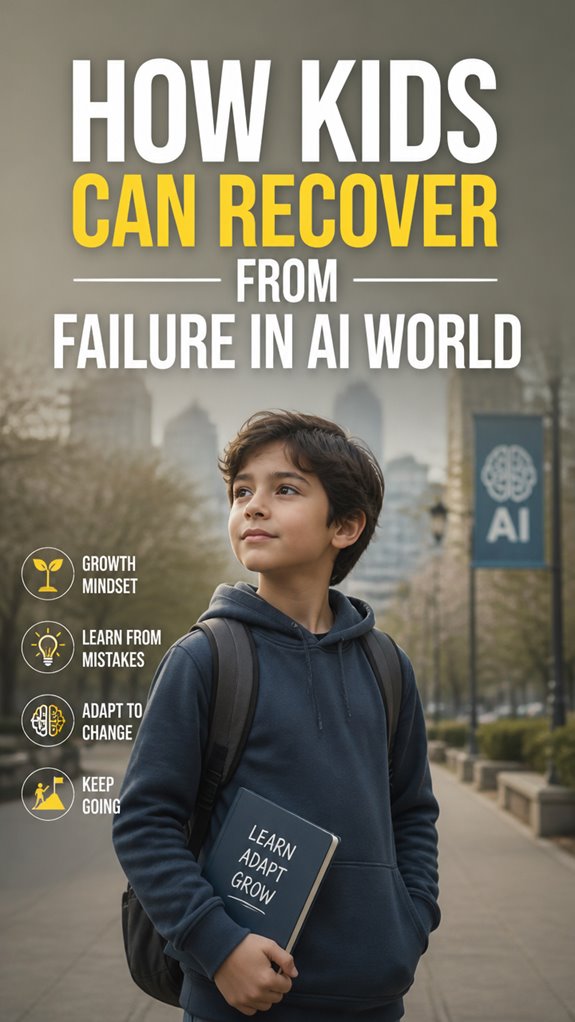
- Teach children to view failures as valuable feedback and opportunities for growth, fostering resilience and a positive mindset.
- Encourage self-reflection and emotional recovery techniques to build confidence and adaptability after setbacks.
- Promote a growth mindset by framing challenges as chances to learn and develop new skills in an AI-driven environment.
- Support risk-taking and provide safe spaces for children to experiment and learn from mistakes without fear.
- Develop critical thinking and digital literacy to help children navigate AI tools confidently and responsibly.
Why Failure Is Key to Building a Growth Mindset
Have you ever noticed how children sometimes shy away from trying new things because they fear failure? It’s natural to want to protect our kids from disappointment, but avoiding failure can limit growth.
Instead, focus on failure acceptance as part of building a learning mindset. When children see failure as a stepping stone, they learn resilience and adaptability—key skills for an uncertain future.
Reframing mistakes this way helps kids understand that setbacks are valuable feedback, not final judgments. It’s about guiding them to embrace challenges confidently, knowing they can recover and improve.
This approach nurtures long-term capability, empowering them to navigate the accelerating world of AI and change. Learning to blend human skills with AI tools enables children to leverage their unique strengths while adapting to technological advancement. Ultimately, failure becomes a tool, not a barrier, for their continued growth.
How to Help Kids Reframe Mistakes as Learning Opportunities
When kids make mistakes, it’s natural for parents to feel worried about their confidence or motivation. But cultural perceptions often influence how we see failure — some view it as a sign of weakness, while success stories remind us it’s part of growth.
Instead of framing mistakes as setbacks, show your child they’re opportunities to learn. Talk about real success stories, like innovators or athletes who faced failures before reaching their goals. This helps children see failure as a step toward mastery, not an end.
Reinforce that everyone makes mistakes and what matters most is how they respond. A system of consistency and calm reassurance provides a foundation that empowers kids to reframe failure, embrace growth, and stay open to future opportunities. Building adaptability skills helps children navigate uncertainty and bounce back more effectively when facing challenges.
Practical Strategies for Building Resilience in Children
Building resilience in children isn’t about protecting them from every setback; it’s about giving them the tools to face challenges with confidence. You can help by teaching self reflection methods, so they learn to evaluate setbacks calmly and see them as opportunities for growth.
Encourage peer support networks, where children find reassurance and strength in their friends, understanding they’re not alone in struggles. Focus on creating routines that foster patience and persistence, reminding them that failure is part of learning.
Reframe worries about AI or rapid change into practical skills like adaptability and problem-solving. By cultivating resilience, you give your child the foundation to navigate uncertainty, turning obstacles into stepping stones for a future that belongs to those who remain adaptable and confident. The antifragile mindset allows children to not only withstand challenges but to actually grow stronger through adversity and unpredictability.
Using AI Tools to Promote Self-Reflection and Independence

AI tools are changing how children learn about themselves, often more quietly than we realize. They foster AI empowerment and encourage technological mindfulness, helping kids gain independence.
To promote self-reflection and independence, consider these approaches:
- Use AI as a reflective partner—encourage children to analyze their decisions with tools that provide feedback, boosting their self-awareness.
- Create spaces where kids explore ideas freely, using AI to extend their curiosity without pressure.
- Teach children to question and evaluate AI suggestions, strengthening their critical judgment and decision-making skills.
These steps shift focus from fear toward long-term skills that prepare your child for an unpredictable future. They build a sense of control, highlighting that true independence comes from mastering tools, not being controlled by them. Establishing safe online habits alongside AI literacy ensures children develop both confidence and responsibility in their digital interactions.
How to Support Emotional Strength and Positive Self-Talk After Failures
Failure is a natural part of growth, especially in a world that constantly evolves. You might worry about how your child handles setbacks, but emphasizing emotional resilience is key.
Teach them self talk techniques to shift their inner dialogue from negativity to encouragement. For example, guiding them to say, “I can learn from this” or “Mistakes are part of becoming stronger,” builds confidence.
These practices help kids see failures as opportunities and foster a growth mindset. Remember, the goal isn’t to eliminate failure but to teach that recovery and self-compassion are powerful tools.
When children learn to support themselves emotionally, they develop a future-ready resilience—an essential skill for steering through an ever-changing, complex environment where adaptability truly matters. In an AI-driven world where value creation is constantly being redefined, teaching children to embrace failure as a learning opportunity becomes even more critical.
Creating a Parent-Child System to Manage AI-Related Challenges
As AI becomes more integrated into daily life, it’s natural to feel uncertain about guiding your children through these challenges. Creating a parent-child system centered on digital empathy helps them navigate AI’s influence confidently. Focus on adaptive learning, so children develop skills to learn independently and handle change gracefully. Flexible learning paths empower students to progress at their own pace while building confidence in their ability to overcome obstacles.
Here are three key ideas:
- Foster open conversations about AI’s role, normalizing uncertainty.
- Encourage emotional resilience by emphasizing effort and growth over results.
- Use AI as a partner, empowering kids to collaborate creatively without dependency.
This approach shifts the focus from fear to empowerment, giving your child a clear framework to adapt and succeed.
Resilience Recovery Toolkit for Kids

When children face setbacks or obstacles, they often feel overwhelmed or uncertain about how to move forward. That’s natural, but you can help your child develop emotional resilience and failure tolerance to thrive in this shifting world.
Helping children build resilience empowers them to overcome setbacks and grow stronger in a changing world.
The Resilience Recovery Toolkit provides practical ways to foster calmness and confidence. Encourage your child to see failures as learning opportunities, not personal flaws.
Teach them to stay curious, analyze what went wrong, and keep trying. Incorporating effective resilience exercises into your daily routine can significantly strengthen your child’s ability to bounce back from challenges. Building resilience isn’t about avoiding challenges but learning to recover and grow from them.
Reinforce the idea that setbacks are part of progress. Over time, your child will see failure as a stepping stone to future success, strengthening their capacity to adapt and flourish in an unpredictable AI-driven environment.
Resilience Research Informs Recovery Strategies
Research shows that nurturing resilience is the foundation for effective recovery from setbacks, especially in a world shaped by rapid change and AI. To help your child thrive, focus on developing environmental resilience and cultural adaptability. These qualities enable children to stay flexible amid continuous change and embrace diverse viewpoints. Developing future skills such as critical thinking and adaptability is essential for navigating technological advancements and unforeseen challenges. As goals themselves become more fluid in the AI era, teaching children to redefine goals dynamically helps them adjust their aspirations based on evolving circumstances and opportunities. 1. Foster emotional strength through daily habits and relationships—making mistakes part of growth. 2. Encourage hands-on activities like puzzles and robotics that build problem-solving and flexibility. 3. Support self-awareness and empathy, enabling kids to navigate digital tools with confidence and trust.
Identified Challenges, Targeted Interventions
In today’s fast-changing world, the biggest challenge isn’t just identifying what skills are necessary, but understanding how to address the gaps that appear as new technologies and roles evolve rapidly.
You might worry that your child could fall behind or struggle with failure. That’s natural, but instead of fear, focus on targeted interventions.
Teaching emotional regulation helps your child manage feelings of frustration and disappointment better, turning setbacks into growth moments. When children can recognize and understand emotions, they develop greater self-awareness that strengthens their ability to bounce back from challenges.
Peer collaboration fosters social skills and shared learning, which build resilience.
By encouraging these habits, you give your child tools to stay adaptable and confident in steering change.
Recall, developing a supportive system grounded in understanding and skill-building prepares your child not just to survive, but to thrive within constant innovation.
The Adaptive Atlas Anti-Fragile Child System
Building resilience in your child starts with cultivating an anti-fragile mindset—one that allows them to thrive amid uncertainty and setbacks. This mindset is rooted in neuroplasticity growth, helping your child adapt and learn from challenges. It also builds risk tolerance, enabling them to face failure confidently. The anti-fragile child system provides a structured framework for developing this resilience through intentional practice and guided experiences.
Fostering an anti-fragile mindset helps children adapt, learn from setbacks, and build resilience in an ever-changing world.
Consider these points:
- Encourage your child to see failure as a growth opportunity, fostering an adaptable brain.
- Support small, manageable risks that grow their confidence and flexibility.
- Reinforce that setbacks are part of long-term capability building, not signs of fixed limits.
This approach offers a sense of control in a changing world. You’re guiding your child to develop resilience, creating a future where they can recover and adapt, no matter what comes.
The Full Adaptive Atlas Framework
The Full Adaptive Atlas Framework offers a clear, practical way to prepare your child for a future that’s constantly changing. Instead of relying on outdated ideas of fixed skills or careers, this system emphasizes creative collaboration and cognitive agility. It helps your child develop flexibility—listening, adapting, and working well with others, including AI tools.
This approach reduces fear by shifting focus from predicting the future to building capabilities that last. You’ll see your child learn how to tackle uncertainty, think independently, and use technology as a partner rather than a replacement.
It’s about nurturing long-term adaptability, so no matter how fast the world shifts, your child will stay confident, capable, and ready to create value in any situation.
The Adaptive Atlas Framework
Five connected systems designed to help parents raise adaptable, future-ready children in a world shaped by AI, automation, and constant change.
| 🛡️ |
Anti-Fragile Child SystemBuilds resilience, adaptability, and the ability to handle uncertainty without shutting down. |
| 📚 |
Learning Stack ModelDevelops self-directed learning habits and continuous skill acquisition beyond school systems. |
| 🚀 |
Future Skill Stack SystemFocuses on high-value human skills that remain relevant in an AI-driven economy. |
| 🤖 |
AI Learning SystemTeaches children how to use AI as a thinking partner instead of becoming dependent on it. |
| 🧭 |
Child Type Navigator SystemPersonalizes learning and development based on each child’s strengths and personality. |
FAQ
How Can Parents Balance Encouragement and Accountability After a Child’s Failure?
You can balance encouragement and accountability by fostering emotional resilience and a growth mindset, praising effort over results, guiding your child through setbacks, and emphasizing that failure is an essential part of learning and long-term growth.
What Signs Indicate a Child Is Struggling to Recover From Setbacks Effectively?
You notice your child avoids challenges, dismisses setbacks, or becomes overwhelmed—signs of struggle with emotional resilience and growth mindset. Recognize these moments as opportunities to empower their liberation through encouragement, helping them reframing failure as growth.
How Do Cultural Differences Influence Resilience-Building Strategies in Children?
You find that cultural expectations shape how resilience training is approached, pushing for different strengths. Embrace diverse strategies, freeing children from rigid norms, and foster resilience through flexible, culturally aware methods that empower their unique capacities and growth.
Can Failure in Ai-Related Activities Harm a Child’s Self-Esteem Long-Term?
Failure in AI-related activities won’t harm your child’s self-esteem long-term if you foster emotional resilience and a growth mindset. Encourage learning from setbacks, showing that effort leads to progress, empowering them to see challenges as opportunities for growth.
How Do Multiple Failures Impact a Child’s Motivation to Learn New Skills?
Multiple failures can reshape your child’s risk perception, fostering emotional resilience. By viewing setbacks as growth opportunities, they stay motivated to learn new skills, understanding that failures are essential steps toward mastery and personal liberation.
References
- https://safeaikids.com/insights/prepare-kids-for-ai-future-skills-for-kids/
- https://jonwhittle.substack.com/p/is-ai-setting-our-kids-up-for-failure
- https://educateempowerkids.org/raising-resilient-children-in-a-technology-driven-world/
- https://www.brookings.edu/articles/a-new-direction-for-students-in-an-ai-world-prosper-prepare-protect/
- https://www.youtube.com/watch?v=FTIJl8vv5Yw
- https://readykids.ai/blogs/articles/resilience-helping-children-bounce-back-from-challenges
- https://podcasts.apple.com/us/podcast/how-to-raise-resilient-kids-in-an-ai-dominated-world/id1439629193?i=1000720837399&uo=4
- https://www.technewsworld.com/story/our-children-are-not-ready-a-generational-crisis-in-the-age-of-ai-179887.html
- https://www.brookings.edu/articles/tips-for-parents-raising-resilient-learners-in-an-ai-world/
- https://mountainlaurel.org/future-proofing-your-child-for-an-ai-world/