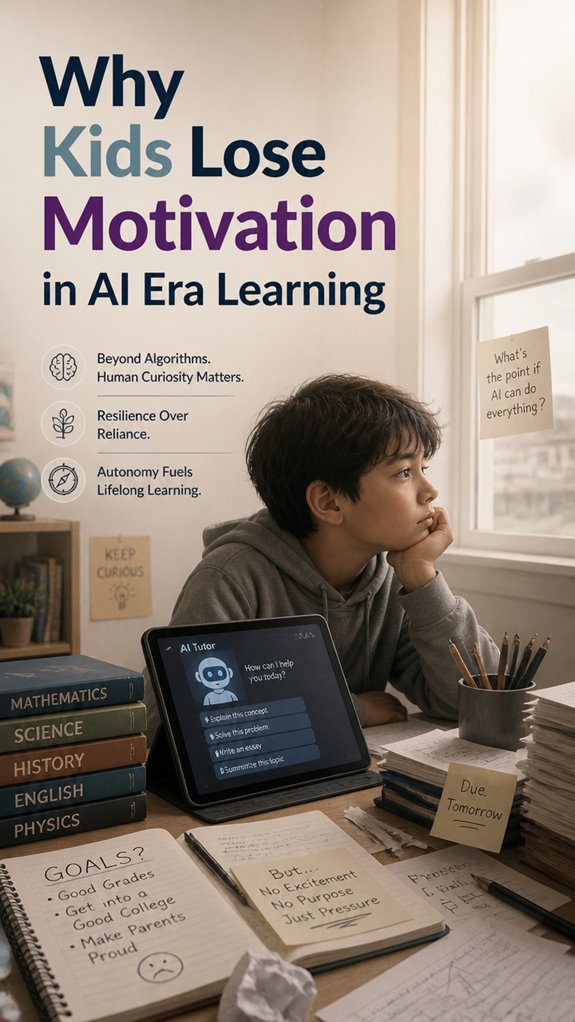
How Can Kids Truly Stay Hopeful When AI Shapes Everything?
Teaching children resilience matters more than ever. Focus on curiosity, ethical thinking, and emotional growth instead of fearing technology. Help them see obstacles as learning moments.
Why We Built Adaptive Atlas for Young Minds
My daughter once asked if robots would “steal her dreams.” That question haunted me until I realized she needed frameworks to understand AI, not reassurance. We created Adaptive Atlas because kids deserve tools to navigate change with confidence, not anxiety. The platform teaches problem-solving through real scenarios, helping young people become architects of their futures rather than passive observers.
A Moment That Changed My Perspective
Last year, my son coded his first program to help organize our family’s schedule. Watching him problem-solve without panic taught me something crucial. Kids don’t need protection from technology. They need permission to engage with it thoughtfully. That shift in my thinking transformed how we approach uncertainty at home.
Quick Takeaways
- Teaching children to see challenges as growth opportunities fosters resilience and hope amid technological change.
- Encouraging curiosity and creative expression helps kids develop confidence and a positive outlook in an AI-driven world.
- Building a growth mindset and ownership empowers children to control their future, maintaining optimism during rapid advancements.
- Promoting digital literacy and ethical awareness enables kids to navigate technology confidently and responsibly.
- Supporting strong caring relationships and routines strengthens neural pathways for emotional regulation and long-term resilience.
How Do Meaningful Challenges Build Hope and Resilience?
When children face meaningful challenges, they learn critical skills that build their hope and resilience for the future. Such challenges teach humility—acknowledging what they don’t know—and perseverance—sticking with difficult tasks. These qualities are essential in a world of constant change, especially with AI advancing rapidly.
Many parents worry about failure or setbacks, but these are opportunities for growth. Research shows that mistakes accelerate learning by helping children understand what strategies work and what doesn’t. When kids learn to accept mistakes and keep trying, they develop confidence rooted in their ability to adapt.
This resilience isn’t just about surviving hardships; it’s about trusting that they can grow through them.
Why Teaching Ownership and Character Strengthen Optimism?
Teaching your child to take ownership of their choices and develop strong character can be one of the most effective ways to foster genuine optimism. Ownership empowerment helps children see themselves as active creators of their future, not passive recipients of circumstances. Character development builds resilience, honesty, and empathy—all qualities that sustain hope during setbacks. By integrating artificial intelligence tools into their learning environment, parents can help children practice writing and self-expression, which strengthens their ability to articulate their values and reflect on their character development.
| Ownership | Character | Optimism |
|---|---|---|
| Builds accountability | Cultivates integrity | Cultivates hope |
| Fosters independence | Encourages empathy | Inspires confidence |
| Promotes responsibility | Reinforces resilience | Reinforces long-term growth |
| Develops self-awareness | Supports trust | Enables adaptability |
When children learn these qualities, they gain control over their future, face challenges with a positive outlook, and understand that their actions shape outcomes. This long-term mindset is essential in an uncertain, dynamic world.
How Can Fostering a Growth Mindset Keep Kids Hopeful?
Fostering a growth mindset can be a powerful way to keep kids hopeful about the future, even in uncertain times. Many parents worry about artificial intelligence replacing human roles, but a growth mindset shifts focus from fixed outcomes to ongoing development.
When children learn to see challenges as opportunities, they develop resilience and emotional regulation, which helps them stay calm and motivated. Instead of fearing failure, they understand that effort and learning are choices they control.
This mindset encourages curiosity and adaptability, key traits for thriving in a world of rapid change. By emphasizing progress over perfection, you help your child trust their ability to grow, face new technologies confidently, and stay hopeful about what’s ahead. Teaching children about respectful online communication also helps them navigate digital spaces with confidence and kindness as they engage with AI-driven platforms.
What Role Do Genuine Connections and Creativity Play?

Genuine connections and creativity are foundational to your child’s resilience and ability to thrive in a changing world. When children build emotional bonds, they develop trust, empathy, and a sense of belonging—core qualities that help them navigate uncertainty.
Artistic expression, like drawing, storytelling, or music, allows kids to process feelings and explore their identity. These experiences keep kids hopeful, showing them they can shape their world, even amid rapid change.
Keep in mind, fears about AI replacing human touch are common; yet, genuine connections and creativity remain uniquely human strengths. Instead of trying to control the future, focus on nurturing these qualities.
Developing adjustment skills through consistent practice helps children build confidence in their ability to handle new situations with greater ease and flexibility. They become the foundation for long-term adaptability, helping your child stay hopeful, inspired, and connected—key for their future success.
Technology Anxiety Reduction Techniques
Have you ever felt overwhelmed by the rapid pace of technological change and wondered how to keep your child grounded? Many parents fear that constant updates and new tools create anxiety or confusion.
The key is fostering technological literacy—helping your child understand and navigate digital tools confidently. Paired with emotional agility, this creates resilience against tech-related stress.
Instead of avoiding technology, view it as a partner in learning and growth. Encourage your child to ask questions, experiment, and reflect on their experiences. Understanding parental concerns about AI’s future can help you address your own anxieties and model healthy attitudes toward technology.
This builds confidence and reduces fear. Keep in mind, the goal isn’t mastery overnight but developing a steady mindset and adaptable skills.
Over time, your child will see technology not as a threat but as an empowering resource that supports their future.
The Adaptive Atlas Anti-Fragile Child System
Many parents worry that their children might struggle to handle setbacks or feel overwhelmed in a world filled with constant change. That’s natural, but it’s also an opportunity for child empowerment. The Adaptive Atlas Anti-Fragile Child System helps kids develop resilience, so they thrive under pressure and grow stronger through challenges. By building antifragility through adversity, children learn to view obstacles not as threats but as catalysts for growth and innovation. Instead of fearing volatility, you can see it as a chance to build future optimism—confidence in their ability to adapt, learn, and create value no matter what comes. This approach shifts focus from fixed success to long-term capability.
The Adaptive Atlas Framework

- Embrace continuous learning to stay flexible.
- Focus on core skills like critical thinking and creativity.
- Use AI as a partner for exploration, not a replacement.
- Personalize the approach to fit your child’s unique strengths.
Fear often arises from feeling out of control, but this framework restores agency. It’s about creating a resilient foundation, so your child confidently navigates uncertainty, sees opportunity in flux, and shapes their own future with clarity and purpose.
Neuroscience of Resilience Development
Understanding how resilience develops in young brains can change the way you support your child’s growth. Brain resilience relies on neural plasticity—the brain’s ability to change and recover. When children face stress or adversity, this malleability helps them adapt, recover, and even grow stronger. Research indicates that the hippocampus and amygdala undergo development influenced by adversity, affecting emotional regulation and resilience. For example, research shows that a larger prefrontal cortex links to fewer emotional issues, and active error-monitoring pathways boost emotion regulation. These brain features aren’t fixed; they can develop from early childhood through adolescence through consistent learning and caring relationships. As the job market evolves with emerging technologies, building resilience becomes increasingly essential for children to navigate uncertain futures with confidence. Stress isn’t the enemy—it’s an opportunity for resilience building if the brain is supported with stable, nurturing environments. By understanding neural plasticity, you can focus on creating routines that foster adaptive responses and long-term brain resilience for your child’s future.
Hope Building Toolkit for Kids
Building hope isn’t about telling kids to stay positive or ignore challenges—it’s about giving them practical tools to see setbacks as opportunities to grow.
Building hope means equipping kids with practical tools to turn setbacks into opportunities for growth.
In a world shaped by AI and rapid change, cultivating AI literacy and future adaptability is key. Here’s a simple hope-building toolkit:
- Emphasize learning from mistakes, helping kids see failure as part of growth. Research shows that failure builds resilience and strengthens children’s ability to persevere through difficulties.
- Encourage curiosity to explore new ideas and ways of thinking.
- Teach resilience by focusing on problem-solving rather than dwelling on problems.
- Support self-awareness so kids understand their strengths and how they can adapt.
These tools empower kids to navigate uncertainty with confidence. They’re not just preparing for a changing world—they’re becoming architects of their own future.
Emerging Ethical Concerns
As we prepare kids to navigate a world shaped by AI, it’s important to contemplate the new ethical questions that come with technological advancement. Concerns around data privacy and algorithm bias are natural but manageable. You can teach children to understand that their personal information isn’t just data—it’s power they should control.
Encourage them to ask questions about how their information is used and to prioritize privacy.
Regarding algorithm bias, help kids see that AI can reflect human biases, but they can also learn to recognize and challenge unfair patterns. This understanding gives them agency in shaping technology’s future. By developing future-ready skills alongside ethical awareness, children become equipped to navigate both the opportunities and challenges that AI presents.
Instead of fearing these issues, focus on building awareness and resilience, empowering them to participate thoughtfully and ethically in a rapidly developing digital world.
The Adaptive Atlas Framework
Five connected systems designed to help parents raise adaptable, future-ready children in a world shaped by AI, automation, and constant change.
| 🛡️ |
Anti-Fragile Child SystemBuilds resilience, adaptability, and the ability to handle uncertainty without shutting down. |
| 📚 |
Learning Stack ModelDevelops self-directed learning habits and continuous skill acquisition beyond school systems. |
| 🚀 |
Future Skill Stack SystemFocuses on high-value human skills that remain relevant in an AI-driven economy. |
| 🤖 |
AI Learning SystemTeaches children how to use AI as a thinking partner instead of becoming dependent on it. |
| 🧭 |
Child Type Navigator SystemPersonalizes learning and development based on each child’s strengths and personality. |
FAQ
How Can Parents Effectively Model Resilience in Uncertain Technological Environments?
Like the phoenix rising from ashes, you model resilience through practical parenting, embracing uncertainty and practicing resilience strategies. By showing adaptability and calmness amidst change, you inspire children to navigate technological chaos with hope and confidence.
What Are the Most Common Misconceptions About Hope in Rapidly Evolving AI Settings?
You might think AI fears are unstoppable, and hope misconceptions suggest trouble, but truth is, hope thrives when you embrace flexibility, see AI as opportunity, and actively cultivate resilience and confidence in steering a rapidly developing future.
How Do Cultural Differences Influence Children’s Hope and Resilience Development?
Cultural narratives shape your children’s hope expressions and resilience by defining values and meaning. Embrace diverse viewpoints, challenge limiting stories, and foster open dialogue to liberate them from restrictive expectations and cultivate adaptive, hopeful mindsets.
What Role Does Emotional Intelligence Play in Maintaining Hope Amidst Algorithmic Changes?
Like a lighthouse guiding ships, emotional intelligence shines brightly, fostering empathy development and social skills, which help children navigate algorithmic shifts with hope and confidence, freeing them from fear and empowering their resilience amid constant change.
How Can Schools Integrate These Resilience-Building Strategies Into Daily Routines?
You can integrate resilience activities and classroom mindfulness daily, fostering independence and adaptability. Incorporate intentional practices that challenge children, encouraging reflection and growth, so they develop resilience naturally while embracing change, gaining freedom from outdated limitations.
References
- https://mountainlaurel.org/future-proofing-your-child-for-an-ai-world/
- https://www.brookings.edu/articles/tips-for-parents-raising-resilient-learners-in-an-ai-world/
- https://conniealbers.com/what-still-matters-for-kids-in-an-ai-world/
- https://www.youtube.com/watch?v=FTIJl8vv5Yw
- https://www.ontrackschool.com/preparing-kids-for-ai-driven-future/
- https://www.gse.harvard.edu/ideas/edcast/24/10/impact-ai-childrens-development
- https://ai.gopubby.com/ai-proof-kids-what-skills-your-child-needs-to-thrive-tomorrow-b341956328e2
- https://pmc.ncbi.nlm.nih.gov/articles/PMC12166937/
- https://blog.chc.edu.au/how-neuroscience-can-help-build-resilient-kids-1
- https://www.apa.org/monitor/2017/09/cover-resilience