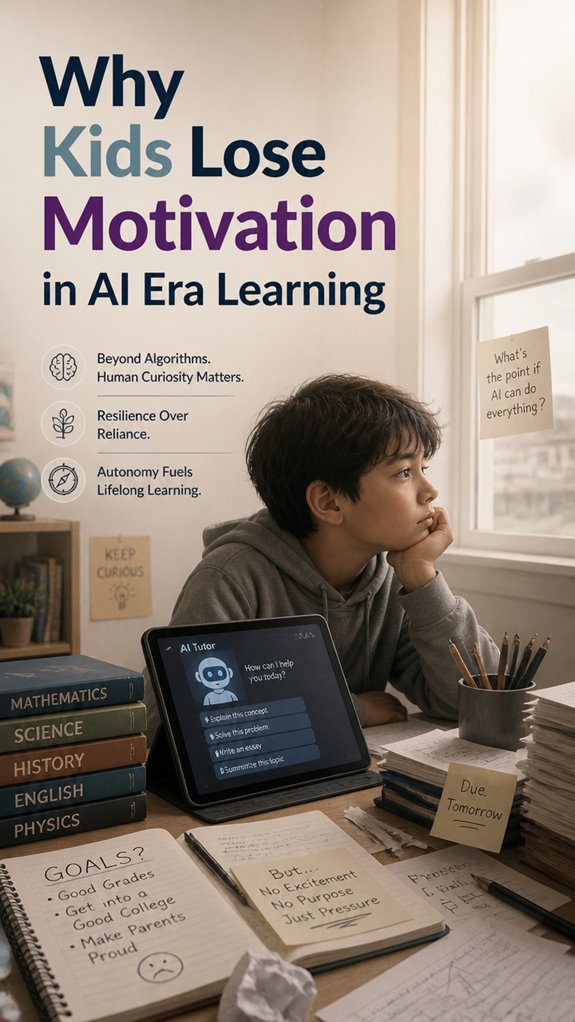
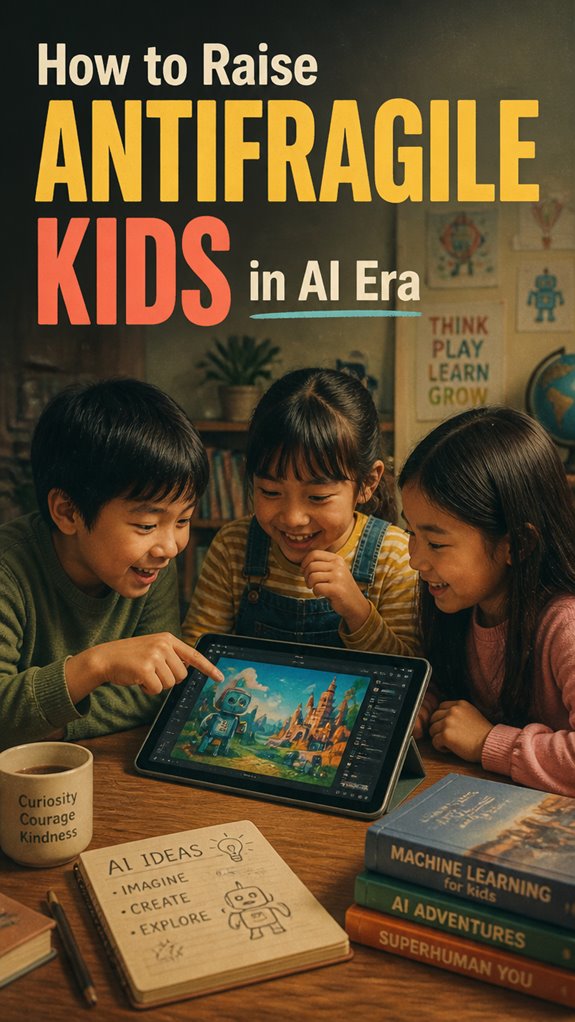
How do you prepare kids for a world that doesn’t exist yet? You build their capacity to thrive in uncertainty, not their ability to predict it.
Resilience through creative play, emotional intelligence, and curiosity forms the foundation. When children explore, take calculated risks, and harvest lessons from failure, they develop adaptive muscles. They learn AI serves them, not the reverse.
Why We Created Adaptive Atlas
My daughter came home frustrated because her coding assignment felt “boring.” Instead of fixing it, I asked her to redesign the problem itself. She spent three hours reimagining the entire project. That moment crystallized why my team and I built Adaptive Atlas. We recognized parents needed a real framework, not generic advice. Something that acknowledged genuine struggle while offering actionable pathways through it.
Real Stakes, Real Growth
Last month, my son faced rejection from his first robotics competition. Rather than console him with platitudes, we examined what he’d learned about systems thinking, collaboration, and iteration. He entered again. This time, understanding failure as feedback transformed everything. His team placed third. More importantly, he’d internalized that setbacks fuel advancement.
Quick Takeaways
- Foster cognitive flexibility and risk tolerance to help children adapt and thrive amid rapid technological changes.
- Encourage creative exploration and problem-solving to build resilience and emotional growth.
- Teach emotional intelligence and adaptability skills through everyday interactions and modeling resilient behaviors.
- Introduce AI literacy early, emphasizing critical thinking and collaborative skills to navigate technological evolution confidently.
- Support a systemic environment with routines and emotional availability to nurture internal strength and exploration.
Why Developing an Antifragile Mindset Is Crucial for Kids in the AI Age
In today’s rapidly changing world, it’s natural for parents to worry about how to prepare children for an uncertain future, especially with AI transforming many jobs and industries. But instead of fearing instability, focus on building an antifragile mindset.
This means nurturing your child’s cognitive flexibility—the ability to adapt quickly and think creatively in new situations. It also involves increasing their risk tolerance, so they feel confident facing challenges without fear of failure.
An antifragile child learns from setbacks and grows stronger, rather than breaking under pressure. By emphasizing these qualities, you give your child the tools to navigate continuous change confidently.
It’s about shifting from predicting the future to empowering them with resilience, adaptability, and long-term capabilities that last.
How Creative Play Builds Resilience in Early Childhood
Have you ever noticed how children bounce back after a setback? Creative play, especially imaginative exploration, sparks playful resilience. It invites kids to experiment, take risks, and learn from mistakes in a safe space. This kind of play nurtures their ability to handle uncertainty, building confidence to face future challenges. When children invent stories, build worlds, or solve puzzles, they learn resilience by experiencing both success and failure without fear. Recognizing and understanding emotions of others during play helps children develop empathy and navigate social challenges with greater awareness.
| Imaginative Exploration | Risk-Taking | Problem-Solving |
|---|---|---|
| Fosters curiosity | Builds courage | Develops decision-making |
| Enhances adaptability | Encourages trial | Reinforces persistence |
| Supports emotional growth | Accepts setbacks | Cultivates flexibility |
| Boosts confidence | Inspires innovation | Promotes independence |
Through playful resilience, your child develops the capacity to thrive amid change.
Teaching Emotional Intelligence and Adaptability for Future Challenges
Teaching emotional intelligence and adaptability today isn’t just about managing feelings; it’s about preparing your child for a future filled with rapid change and uncertainty. To foster emotional resilience and social agility, focus on these core patterns:
- Encourage awareness of emotions, helping your child identify and express feelings calmly. This builds emotional resilience to setbacks.
- Practice flexible thinking, allowing them to adapt their responses and stay engaged amidst surprises—key for steering through unpredictability.
- Model social agility by showing how to listen deeply, empathize, and collaborate across differences, cultivating resilience and adaptability in social systems.
Integrating these practices into consistent family learning routines creates a foundation where emotional intelligence and adaptability become natural parts of daily life.
Practical Strategies to Encourage Curiosity and Lifelong Learning

Encouraging curiosity and lifelong learning isn’t about adding more tasks or discipline to your child’s day; it’s about creating an environment where asking questions and exploring feels natural and safe. You can do this by fostering innovative questioning—encouraging your child to ask “why,” “how,” and “what if.” Promote experiential exploration through hands-on activities that connect learning to real-world experiences, making discovery engaging and meaningful. Children thrive when they see learning as an ongoing adventure, not a task to complete. Open communication between parent and child creates the foundation for this exploratory mindset, allowing kids to express their thoughts without fear of judgment. Reframe fears of uncertainty by emphasizing mastery of adaptive skills over rote knowledge. When you support their innate curiosity, you give them the tools to navigate an unpredictable future confidently, turning exploration into a valuable habit that fuels their growth and resilience.
Inconsistent Parental Support
When support from parents comes inconsistently, it can make it harder for your child to develop the resilience and adaptability they need for the future. Parental consistency and emotional availability are essential. They provide a stable foundation where children learn trust and confidence.
Without these, children may feel unsure about their worth or future, which can hinder their ability to navigate change. Understanding media influence can also help parents recognize how external messages affect their child’s confidence and self-perception during vulnerable moments.
Here’s what you can focus on:
- Be Present Regularly: Consistency in your attention helps children feel secure amid uncertainty.
- Show Emotional Availability: Respond empathetically, so they learn they’re supported through challenges.
- Create Predictable Routines: Stability reduces anxiety and builds trust in the process of growth.
The Adaptive Atlas Anti-Fragile Child System
The foundation of raising resilient children in an uncertain world starts with fostering their anti-fragility—that is, their ability to grow stronger through challenges. You can teach resilience training and stress management in simple, consistent ways that give your child a sense of control. The Anti-Fragile Child System provides a structured framework for implementing these practices effectively across different life domains.
Instead of shielding them from difficulty, help them see failures as growth opportunities. This builds confidence and adaptability, essential skills in a rapidly changing AI-driven world.
Keep in mind, it’s not about avoiding stress but learning how to stay calm and centered during tough times. By supporting your child’s capacity to recover and thrive through adversity, you prepare them for a future where flexibility and long-term capability matter most.
Your steady guidance makes all the difference.
The Adaptive Atlas Framework
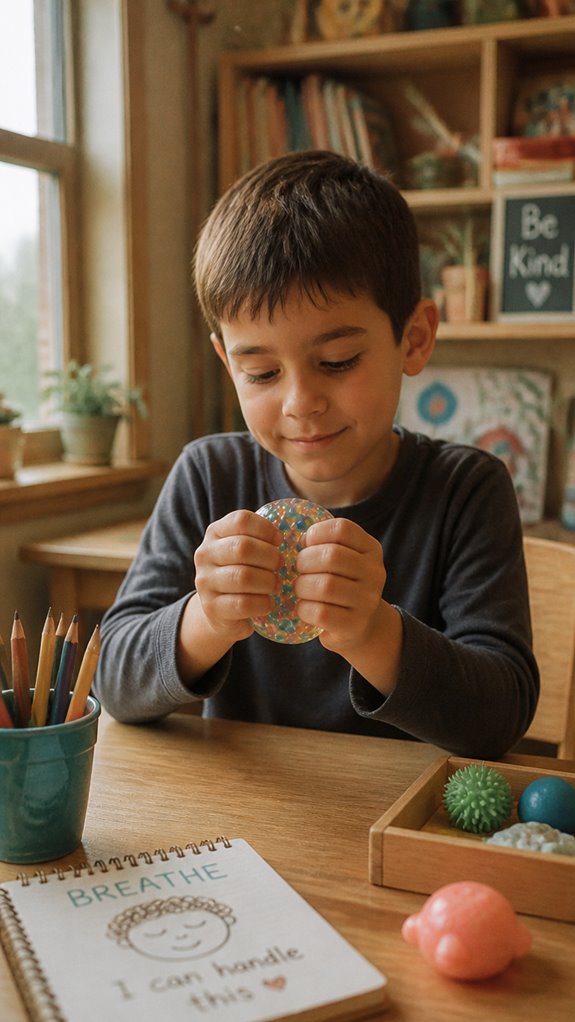
The Adaptive Atlas Framework offers a clear way to understand how you can prepare children for a future that’s constantly shifting. It’s based on recent neuroscience breakthroughs that show how adaptable brains are, and the importance of cultural adaptations to support diverse minds.
This system helps you see that success isn’t about predicting change, but building resilience and flexibility.
Here’s how it empowers you:
- Recognize that fostering adaptability in children *release* their potential amid ongoing change.
- Use cultural *perspectives* to tailor growth—embracing diversity makes children more resourceful.
- Focus on systems over quick fixes, creating a steady foundation for lifelong learning and agility.
Genetic Resilience Studies Insights
Understanding genetic resilience can seem complex, but at its core, it offers practical hope for parents. Recent genetic perspectives reveal resilience markers—specific genes linked to strength in handling stress and adversity. For example, variants in genes like DCLK2, BDNF, and COMT influence how well children bounce back from setbacks. These markers show that resilience isn’t just about environment; it has a biological basis. Recognizing this helps you focus on nurturing your child’s inner strength, rather than fearing weakness.
| Resilience Markers | Genetic Perspectives | How You Can Help |
|---|---|---|
| DCLK2, BDNF | Genes influence stress response | Encourage adaptability, growth mindset |
| COMT variants | Impact emotional regulation | Foster emotional resilience |
| Polygenic scores | Predict resilience trajectories | Support positive experiences and purpose |
This knowledge empowers you to guide your child’s development with confidence and clarity.
Antifragile Kids System
- Encourage resilience—teach them to see setbacks as opportunities to learn, building confidence in handling change.
- Promote exploration—support their curiosity, helping them develop flexibility in thinking and problem-solving.
- Model calm decision-making—show them how to approach uncertainty calmly, enhancing their risk tolerance and adaptability. Maintaining healthy work-rest balance ensures they have the mental energy to develop these antifragile qualities without burnout.
AI Literacy in Early Education
As children grow more comfortable with exploring their world, introducing AI literacy early on becomes a natural extension of their curiosity and learning process.
By engaging with generative AI tools, children can learn to create and problem-solve, building cognitive flexibility. This isn’t about replacing traditional skills but developing adaptable thinking in a rapidly shifting terrain.
Engaging with AI tools fosters creativity and problem-solving skills, cultivating adaptable thinking for a changing world.
Many parents fear that AI might take over, but the focus should be on teaching children how to collaborate with these systems, harnessing them as amplifiers of their own ideas.
Early AI literacy fosters confidence, independence, and a long-term capacity to navigate change. Building engaging learning systems that incorporate AI helps children develop structured approaches to understanding technology’s role in their education and growth.
It’s about providing children with a system to understand and leverage AI, helping them stay relevant and resilient in an uncertain future.
The Adaptive Atlas Framework
Five connected systems designed to help parents raise adaptable, future-ready children in a world shaped by AI, automation, and constant change.
| 🛡️ |
Anti-Fragile Child SystemBuilds resilience, adaptability, and the ability to handle uncertainty without shutting down. |
| 📚 |
Learning Stack ModelDevelops self-directed learning habits and continuous skill acquisition beyond school systems. |
| 🚀 |
Future Skill Stack SystemFocuses on high-value human skills that remain relevant in an AI-driven economy. |
| 🤖 |
AI Learning SystemTeaches children how to use AI as a thinking partner instead of becoming dependent on it. |
| 🧭 |
Child Type Navigator SystemPersonalizes learning and development based on each child’s strengths and personality. |
FAQ
How Early Should I Start Introducing Resilience-Building Activities to My Child?
Think of resilience as planting a seed early; start interventions with activities fostering emotional intelligence as soon as possible. Early intervention nurtures your child’s ability to grow stronger amidst chaos, liberating them through adaptable, lifelong resilience skills.
What Are Common Mistakes Parents Make When Fostering Adaptability in Kids?
You often hinder adaptability by overprotecting, which breeds helplessness, and falling into fixed mindset pitfalls, limiting growth. To free your child, encourage independence, embrace failure, and foster resilience, turning challenges into opportunities for their lifelong learning journey.
How Can I Measure My Child’s Progress Toward Becoming Antifragile?
You can measure your child’s progress by observing their growth mindset and self-efficacy, noticing how they confront challenges, bounce back from setbacks, and embrace ambiguity with confidence—fueling their fearless, flexible journey toward antifragility.
Are There Cultural Differences Affecting Antifragile Education Approaches?
Cultural worldview and parenting norms shape antifragile education approaches by influencing how you foster resilience, independence, and adaptability. Embrace diverse viewpoints, challenge traditional expectations, and design personalized strategies to liberate your child’s potential in a rapidly changing world.
How Do I Balance Technological Exposure With Developmentally Appropriate Activities?
You should set clear digital boundaries and limit screen time, encouraging activities that foster resilience and creativity. Balance technological exposure with play, nature, and social interaction, empowering your child’s growth while embracing the freedom to explore developmentally appropriate experiences.
References
- https://www.youtube.com/watch?v=kiKI3fUOHeE
- https://discourse.biologos.org/t/raising-our-children-in-the-age-of-artificial-intelligence/56646
- https://robertglazer.substack.com/p/ai-job-elimination-preparation
- https://www.etsy.com/nz/listing/4462092392/raising-anti-fragile-children-in-the-age
- https://pubmed.ncbi.nlm.nih.gov/31583809/
- https://pmc.ncbi.nlm.nih.gov/articles/PMC9163442/
- https://www.tc.columbia.edu/articles/2021/april/a-study-by-tcs-george-bonanno-finds-a-genetic-basis-for-resilience/
- https://stories.tamu.edu/news/2026/02/10/the-genetics-of-anxiety-landmark-study-highlights-risk-and-resilience/
- https://communities.springernature.com/posts/resilience-and-the-genome-how-naturally-resilient-are-we
- https://www.mountsinai.org/about/newsroom/2025/study-reveals-how-inherited-genes-help-shape-the-course-of-cancer