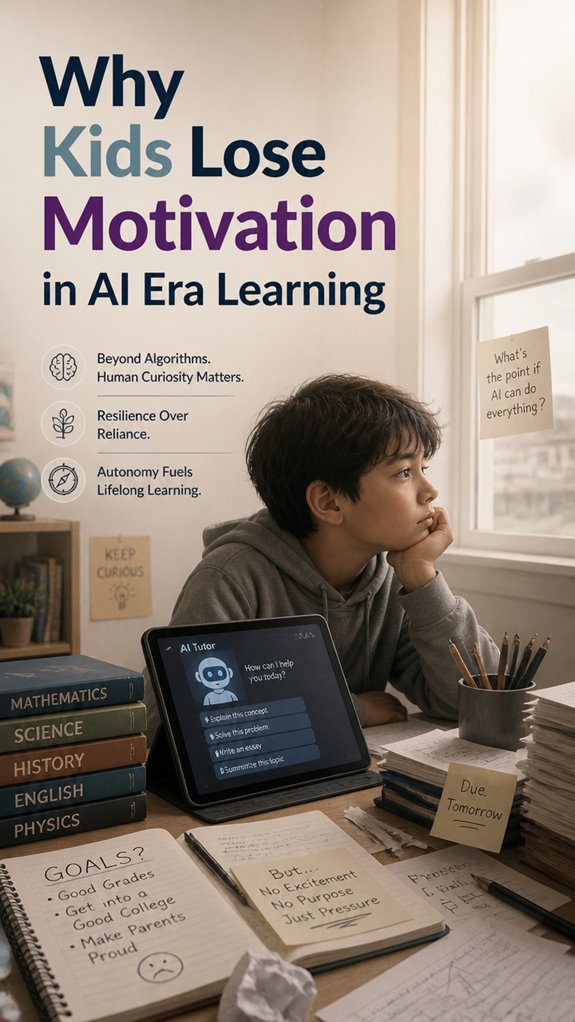
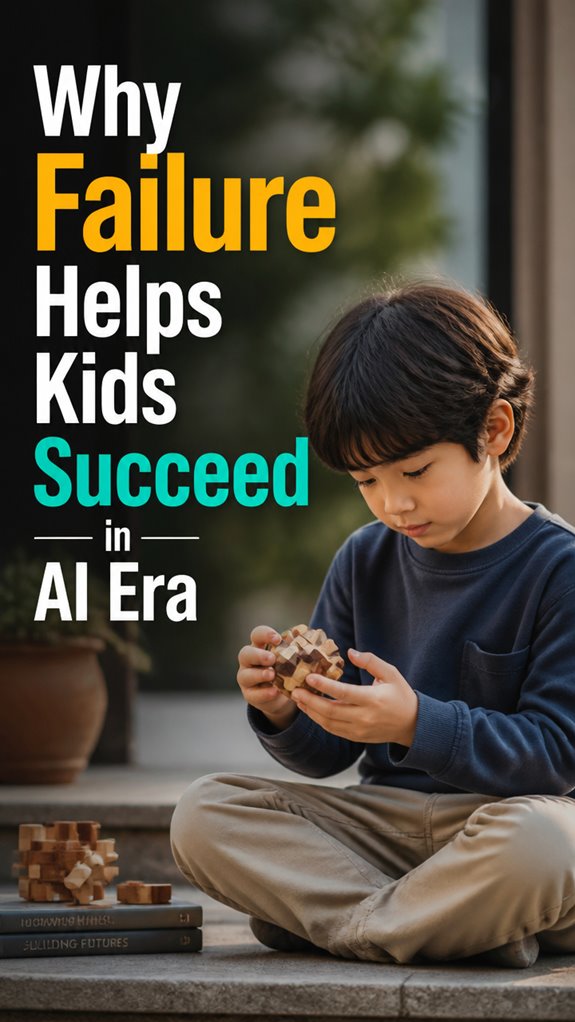
Why Should We Let Our Kids Fail in the AI Era?
Because resilience beats perfection. In a world where algorithms evolve faster than we can follow them, your child needs to stumble, recover, and adapt. That’s the real superpower.
I learned this the hard way. My daughter froze during her first coding competition. Tears, frustration, the whole package. But instead of rescuing her, we sat together and unpacked what went wrong. She rebuilt her solution. Won the next one. That moment sparked Adaptive Atlas, our platform designed to normalize productive struggle for kids. We built it because we watched too many brilliant young minds collapse under the weight of impossible standards.
The Moment I Stopped Protecting My Kid from Struggle
Last spring, my son’s robotics project failed spectacularly. Gears stripped. Code crashed. I watched him rage-quit, then quietly restart. No rescue needed. He debugged independently, iterated twice, and created something stronger. That’s when I realized failure isn’t the obstacle. It’s the pathway.
Quick Takeaways
- Failure reinforces neural pathways, making skills more automatic and adaptable in a rapidly changing AI-driven world.
- Experiencing setbacks fosters resilience and emotional regulation, essential for navigating AI and automation uncertainties.
- Embracing mistakes promotes a growth mindset, encouraging continuous learning and creative problem-solving.
- Facing challenges without extensive practice builds independence and problem-solving skills vital for future adaptability.
- Learning from failure develops systems thinking, helping children understand interconnected problems in complex AI environments.
Why Failure Is Vital for Kids’ Success in the AI Age
In the AI era, many parents worry that failure might harm their child’s confidence or future prospects. But failure is actually essential for their success.
It helps them build strong memory reinforcement, making lessons stick better and skills last longer. It also teaches emotional regulation, so they learn to handle setbacks calmly and stay focused.
Instead of avoiding failure, treat it as a chance to grow. When children face challenges and recover, they develop resilience and adaptability—key skills for the future. Learning from failure cultivates systems thinking skills, enabling them to understand how different aspects of problems connect and interact.
By supporting their ability to learn from mistakes, you give them tools to navigate an ever-changing world confidently.
Keep in mind, failure isn’t a sign of weakness; it’s a foundation for developing the capability and independence they’ll need tomorrow.
How Growth Mindset Builds Resilience and Fosters Learning From Mistakes
A growth mindset shifts how your child views mistakes, turning setbacks into opportunities for learning rather than signals of failure. This outlook fosters emotional agility, helping children stay calm and flexible when faced with challenges.
Instead of fearing errors, they see creative experimentation as part of growth. By embracing this mindset, kids develop resilience—they learn to bounce back, adapt, and keep going.
Viewing mistakes as opportunities fosters resilience, encouraging kids to bounce back, adapt, and keep growing.
It’s important to understand that mistakes aren’t threats but crucial feedback. As parents, you can support this by encouraging reflection, not judgment, and celebrating effort over outcomes. Building structured learning systems at home reinforces these principles and creates consistent opportunities for practice and growth.
Over time, your child builds a strong foundation for the future—an adaptable, confident learner ready for a world of continuous change. This approach empowers them to thrive, not just survive, in the AI-driven era.
How Brain Plasticity Rewires Kids’ Brains Through Repetition and Failure
Children’s brains are surprisingly adaptable, often rewiring themselves through repeated practice and even failure. This process, known as neural rewiring, shows that your child’s brain isn’t fixed; it’s dynamic and capable of change.
Repetition benefits learning by strengthening connections between neurons, making skills more automatic over time. When your child faces setbacks, they’re actually creating new pathways—building resilience and agility for the future.
Many parents fear failure might hinder progress, but in fact, it’s a crucial part of brain development. Encouraging your child to persist through challenges helps their brain adapt, preparing them for a world of continuous change.
This understanding shifts the focus from avoiding mistakes to seeing them as essential steps in growth, fostering long-term adaptability and confidence.
Parent Tips to Help Kids Embrace Safe Failures and Grow

Have you ever wondered how failure can actually help your child grow stronger and more adaptable? It’s natural to fear mistakes, but they’re essential for building emotional intelligence and moral development. When your child faces safe failures, they learn resilience, patience, and empathy—core skills for steering a changing world. Research shows that neuroplasticity in children allows their brains to rewire and strengthen neural pathways when they encounter and recover from mistakes.
To support this, encourage a growth mindset by praising effort, not just results. Show understanding during setbacks, and discuss what was learned. Avoid punishing mistakes; instead, frame them as opportunities to grow.
This approach helps children develop confidence in their ability to handle challenges. Over time, they become self-directed learners who see failure not as a threat, but as a crucial part of their journey toward future success.
Failure Advantage Guide for Parents
Understanding how failure can be used as an advantage shifts your outlook from seeing mistakes as setbacks to viewing them as opportunities for growth. When you encourage risk-taking, your child learns emotional resilience—bouncing back from setbacks and handling uncertainty confidently. It’s natural to fear failure, but viewing it as a learning system helps reduce that fear. By developing awareness and control over distractions, children can focus better on processing their mistakes and extracting meaningful lessons from each experience. Here’s a simple guide:
| Embrace Failure | Foster Risk-Taking | Build Resilience |
|---|---|---|
| Use mistakes as lessons | Encourage effort over results | Support persistence after setbacks |
| Model openness to failure | Celebrate small risks | Teach recovery strategies |
| Focus on growth | Avoid blame | Reinforce confidence |
This approach gives your child the skills needed for a future where adaptability and resilience open endless possibilities.
Resilience Boosts Neural Pathways
Neural pathways in the brain are surprisingly adaptable, even as children grow older, thanks to a process called neuroplasticity. When you engage in resilience training, you help strengthen these pathways, making your child better equipped to handle setbacks and uncertainties. Neuroplasticity allows the brain to reorganize and form new connections in response to experiences, promoting learning and growth. This isn’t about eliminating failure but about building emotional resilience that reorganizes neural connections for growth. As children face challenges, their brains create new connections, improving problem-solving and emotional responses, especially in unpredictable environments. This natural ability to adapt supports long-term learning and flexibility—crucial skills in an AI-driven world. By fostering resilience, you’re giving your child the capacity to recover from setbacks and thrive amidst change, establishing a foundation for continuous growth and future success.
Insufficient Practice Improves Resilience

Did you know that sometimes, giving children fewer opportunities to practice can actually strengthen their resilience? This is part of the Practice Paradox—less repetition, integrated with Failure as Feedback, builds toughness. When kids face challenges without endless rehearsal, they learn to adapt quickly. Building strength through adversity helps children develop the mental fortitude needed to navigate uncertainty in an AI-driven world.
You might worry they won’t be prepared, but in reality,:
- Facing scarcity of practice pushes them to develop problem-solving skills.
- It encourages them to see failure as a cue for growth, rather than an endpoint.
- It fosters independence, making them more flexible amid change.
The Adaptive Atlas Anti-Fragile Child System
Children face a world filled with uncertainty, and it’s natural for parents to worry about their ability to cope with challenges. But instead of fearing failure, focus on building an anti-fragile child system.
This means teaching your child risk management skills; they learn to face setbacks and frustration without shutting down. Emotional regulation becomes a key part of this process, helping them stay calm and centered during tough moments. The anti-fragile framework strengthens children by exposing them to manageable stressors that build confidence and adaptability over time.
By supporting resilience now, you give your child the foundation to adapt to rapid change and continuous learning.
Keep in mind, it’s not about avoiding failure but about creating a system that helps them grow stronger with each challenge. This approach prepares them for a future where flexibility and long-term thinking are more valuable than fixed knowledge.
The Full Adaptive Atlas Framework
While you worry the future’s rapid changes might leave your child behind, Adaptive Atlas offers a complete, connected framework that builds lasting capability instead. You free your child from rigid paths, embracing systems that thrive amid AI shifts—like those reshaping jobs at companies such as OpenAI.
This full framework liberates through five layered systems, turning fear into control:
- Anti-Fragile base builds emotional intelligence to handle setbacks, ensuring resilience for lifelong navigation.
- Learning Stack fosters self-directed growth, amplifying creativity enhancement with real-world experiments.
- Future Skills, AI tools, and Child Type Navigator personalize high-leverage abilities, like problem-framing that AI can’t replace.
Your child gains independence, compounding skills for any economy—calmly adaptable, boldly creative.
The Adaptive Atlas Framework
Five connected systems designed to help parents raise adaptable, future-ready children in a world shaped by AI, automation, and constant change.
| 🛡️ |
Anti-Fragile Child SystemBuilds resilience, adaptability, and the ability to handle uncertainty without shutting down. |
| 📚 |
Learning Stack ModelDevelops self-directed learning habits and continuous skill acquisition beyond school systems. |
| 🚀 |
Future Skill Stack SystemFocuses on high-value human skills that remain relevant in an AI-driven economy. |
| 🤖 |
AI Learning SystemTeaches children how to use AI as a thinking partner instead of becoming dependent on it. |
| 🧭 |
Child Type Navigator SystemPersonalizes learning and development based on each child’s strengths and personality. |
FAQ
How Can Parents Balance Encouraging Effort Without Fostering Fear of Failure?
You can foster a growth mindset by openly communicating about setbacks, emphasizing learning over perfection, and encouraging effort, so your child feels empowered to try boldly without fear of failure holding them back.
What Specific Activities Promote Healthy Risk-Taking in Children?
You can promote healthy risk-taking by encouraging creative play and peer collaboration, empowering your child to experiment freely, embrace challenges, and learn resilience. This liberation builds confidence and adaptability, preparing them for an uncertain, ever-changing future.
How Do Cultural Differences Affect Children’s Acceptance of Failure?
Cultural perceptions heavily influence your child’s acceptance of failure, often reinforced by failure stigma. To liberate them, you can reshape these beliefs, encouraging resilience and growth mindset, so they view setbacks as essential learning opportunities rather than shameful setbacks.
At What Age Should Children Start Learning About Resilience?
Start fostering emotional resilience early, around ages 3 to 5, so your child develops a growth mindset, embracing challenges as opportunities. Like cultivating a garden, this nurtures independence, confidence, and a future-ready ability to thrive amid life’s unpredictable seasons.
How Can Teachers Integrate Failure-Based Learning Into Curriculums Effectively?
You can integrate failure-based learning through creative assessments, encouraging students to experiment without fear, promoting emotional resilience. Embrace setbacks as opportunities, fostering independence and adaptive thinking, so learners thrive amid continuous change and release their full potential.
References
- https://jonwhittle.substack.com/p/is-ai-setting-our-kids-up-for-failure
- https://casmi.northwestern.edu/news/articles/2024/turning-failure-into-the-foundation-for-ai-success.html
- https://www.moneytalksnews.com/american-parents-fear-schools-are-failing-to-prep-kids-for-an-ai-driven-workplace/
- https://www.youtube.com/shorts/NOc4Z8Rq9Lw
- https://eaglepubs.erau.edu/psychologyofresilience/chapter/main-content/
- https://pmc.ncbi.nlm.nih.gov/articles/PMC6717018/
- https://myneurobalance.com/why-emotional-resilience-is-a-neurological-process/
- https://pmc.ncbi.nlm.nih.gov/articles/PMC3580862/
- https://www.psychologytoday.com/us/blog/brain-reboot/202311/neuro-resilience-the-brains-ability-to-recover-from-stress
- https://nyaspubs.onlinelibrary.wiley.com/doi/10.1111/nyas.15347